A profitable Shopify store attracts a better-informed conversation when a buyer can see why the profit exists and what it would take to maintain it. A large revenue screenshot does not answer those questions. Show the connection between products, customers, costs and the operating work.
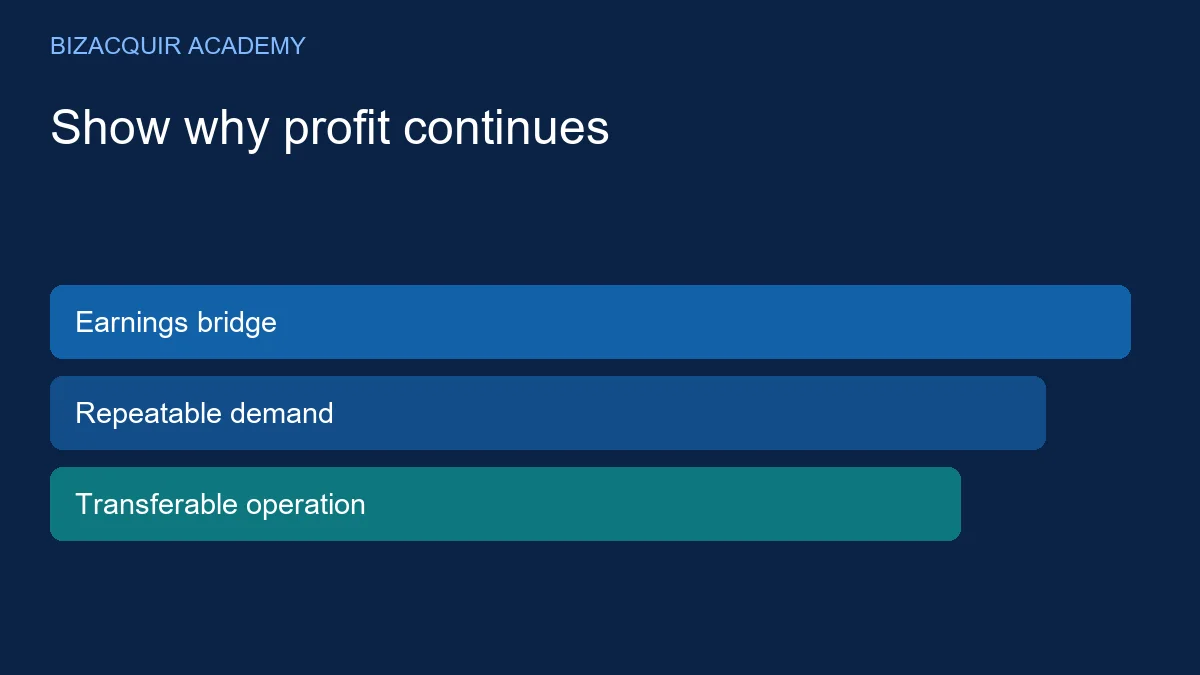
Lead with the source of earnings
Describe the product range, fulfillment model and principal route to customers in the opening paragraph. Then give clearly dated results in the appropriate private financial section. Keep revenue, refunds, cost of goods, advertising and operating expenses separate. The buyer needs to distinguish a repeatable operation from a good month.
For example, “an established accessories brand with repeat purchases and documented replenishment” explains more than “high-profit ecommerce opportunity.” Use statements you can support; do not substitute adjectives for records.
Explain a profitable month with a simple bridge
Illustrative example, not a BizAcquir transaction: a store has USD 30,000 in gross sales, USD 2,000 in refunds and USD 28,000 in sales after those refunds. Product costs, shipping, advertising and other operating expenses total USD 21,000, leaving USD 7,000 on that stated operating-profit basis. Taxes, owner compensation and financing treatment still need to be defined.
If the founder performs substantial unpaid work, show a separate planning scenario for replacing it. Do not silently alter historical profit. A buyer can then judge both the reported result and the cost of running the business under new ownership.
Make growth understandable
| Claim | Evidence to prepare | Question a buyer will ask |
|---|---|---|
| Repeat demand | Comparable customer cohorts and return-purchase periods | Does demand continue without a discount? |
| Efficient acquisition | Channel spend beside the corresponding sales period | What happens when advertising costs change? |
| Healthy inventory | Stock age, cost, ownership and sell-through | How much cash is tied up in slow-moving goods? |
| Manageable workload | Routine tasks, hours and responsible people | Which work still depends on the founder? |
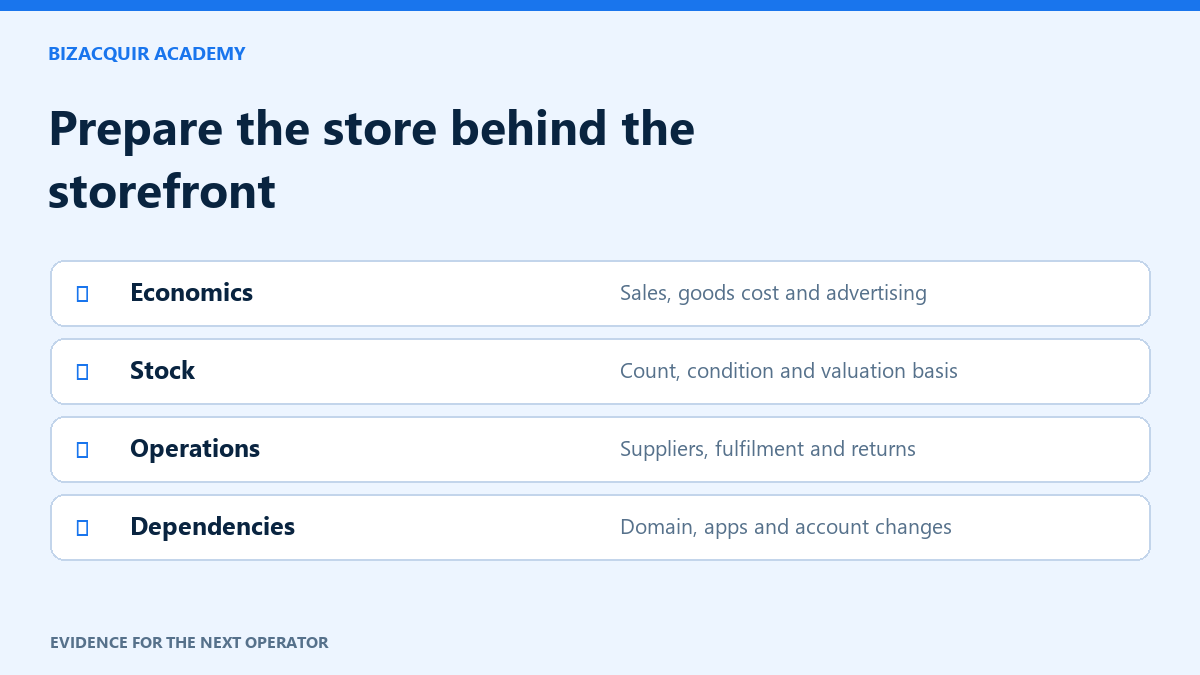
Use the inventory worksheet to separate saleable stock from damaged, obsolete or supplier-owned goods. Inventory quantity alone does not establish its value.
Match your strengths to the buyer
An operator with fulfillment experience may value a store with sound demand and a process they can improve. A brand owner may be interested in complementary products or distribution. A buyer seeking minimal involvement will care particularly about staffing and predictable workload. Present the same truthful business differently according to the relevant question; do not change the numbers to fit the audience.
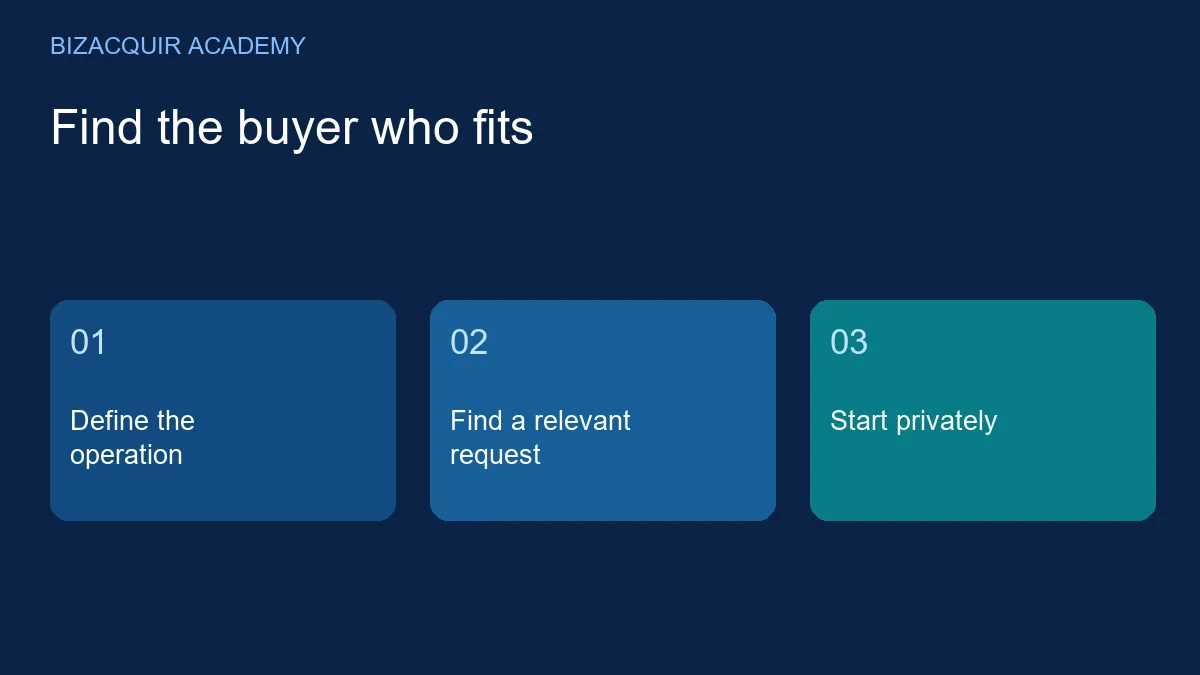
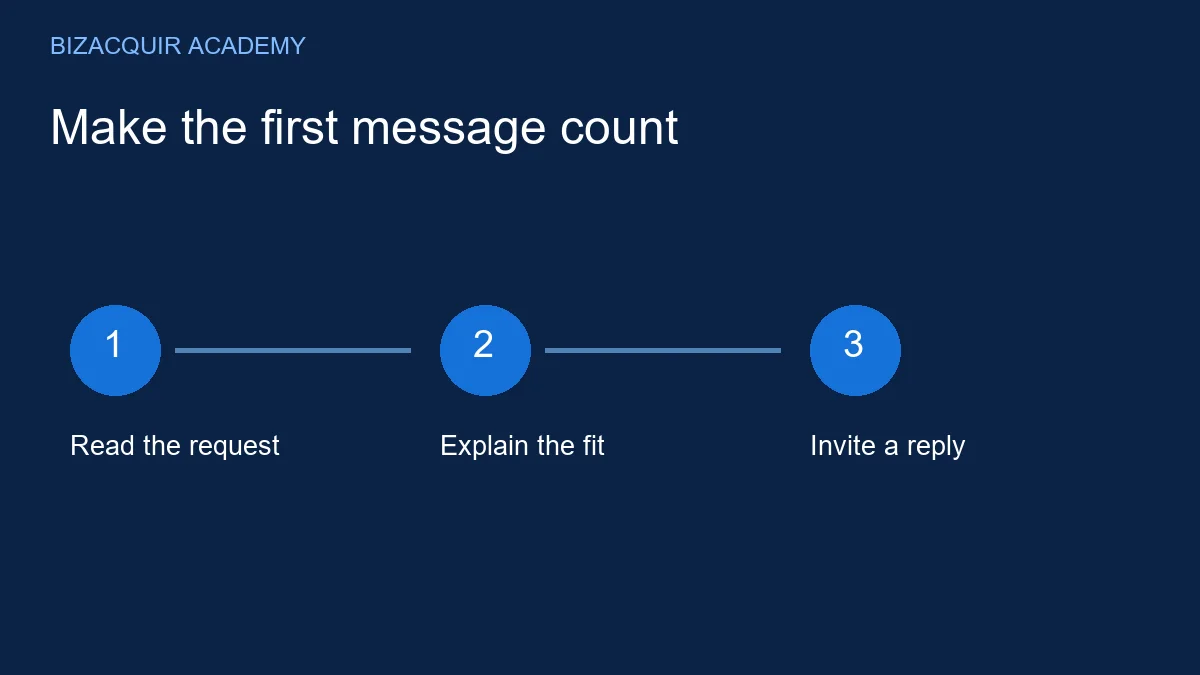
On Businesses Wanted, read the request before responding. Mention one relevant strength and one meaningful operating condition. If a buyer specifically excludes inventory, a strong stock position will not solve that mismatch.
Remove preventable handover uncertainty
List the assets included, the permissions or consents still needed and the proposed transition support. Review supplier, app, creative and domain arrangements before promising that everything transfers. Shopify's official ownership guidance treats the store and associated obligations as preparation items; a business sale needs more than a login change.
The transfer worksheet helps you identify who does what. Keep delivery commitments specific: training sessions, written procedures and an agreed support period are easier to assess than “full support included.”
Improve the evidence before changing the price
If buyers repeatedly ask the same question, add a clear answer to the appropriate listing section. If they cannot reconcile profit, fix the explanation and underlying records. If they understand the business but disagree on value, discuss the financial basis and offer conditions. More promotional claims will not resolve a missing expense or an uncertain supplier relationship.
Get a private Shopify valuation for an indicative starting point, then browse relevant buyer requests. A valuation is not a promise of the offer you will receive.