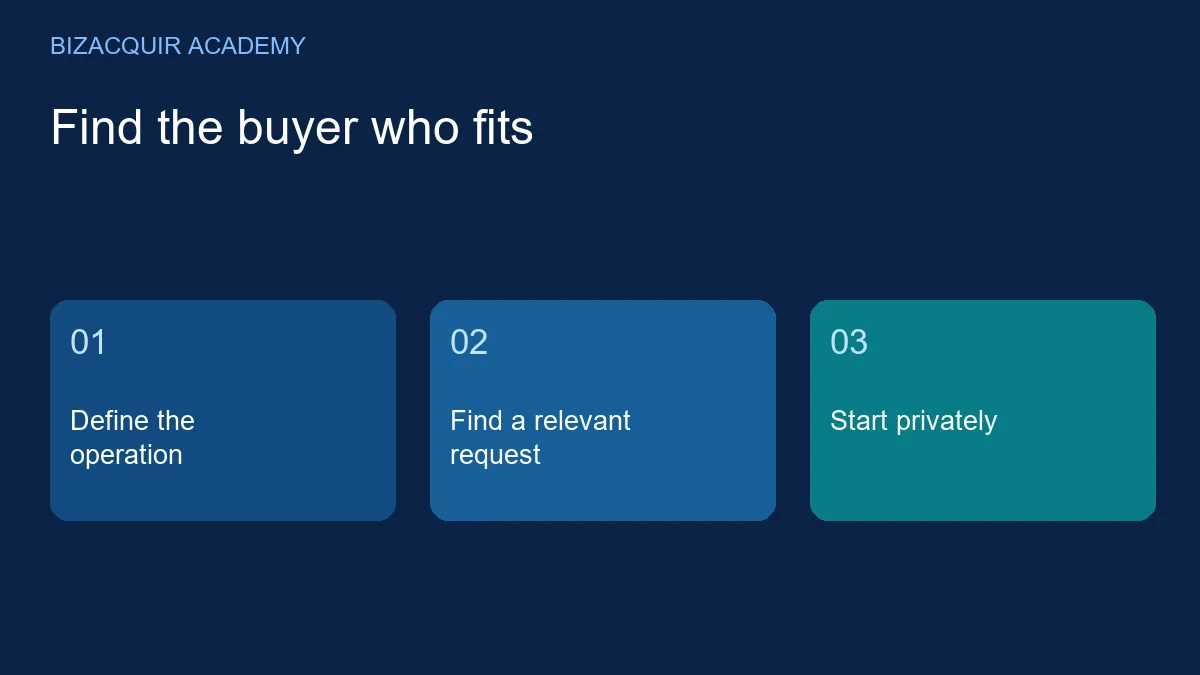
To find a buyer for your Shopify store, describe the operation someone will take over, choose channels where people acquire whole businesses, and approach buyers whose budget and experience fit it. The aim is a credible conversation about the business—not more visitors shopping for its products.
Define the business a buyer would be acquiring
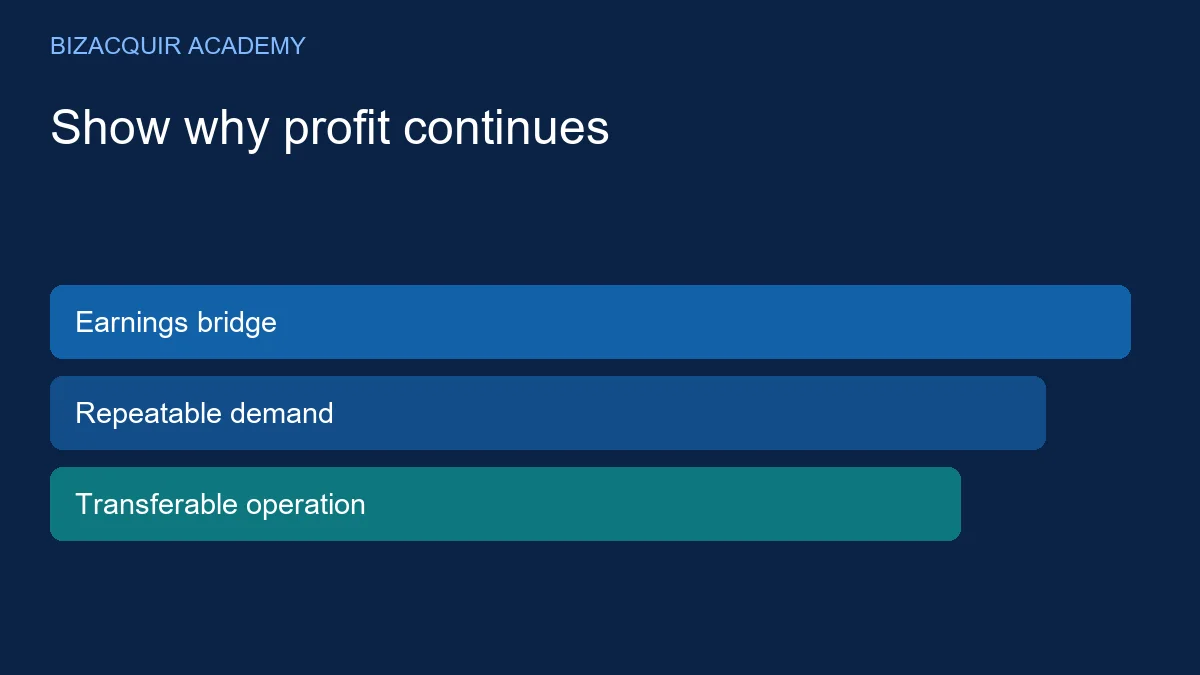
Write a short summary covering the product category, how orders are fulfilled, the earning period, the owner's workload and the assets included. A profitable store with repeat customers needs a different introduction from a seasonal store dependent on one advertising campaign. Both can be worth discussing, but hiding that difference wastes everyone's time.
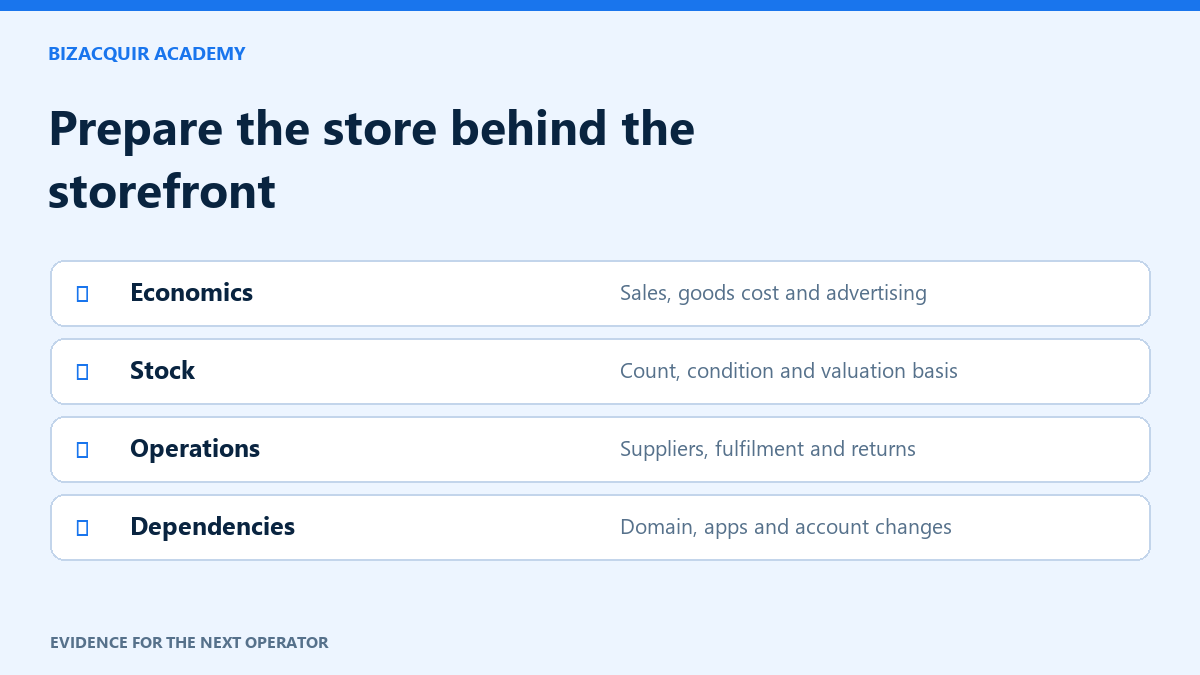
Start with three documents: a period-by-period financial summary, an inventory and obligations list, and a simple operating map. Keep customer identities and supplier contracts out of your public teaser. The Shopify sale-preparation guide explains the fuller preparation work.
Choose a route that matches your priorities
| Route | Useful when | Question to resolve |
|---|---|---|
| A business-for-sale listing | You want buyers to discover a clear, continuing offer | Which details should be public? |
| A published buying request | A buyer has described a business like yours | Do the model, budget and workload genuinely fit? |
| A relevant professional introduction | An adviser knows a suitable acquirer | Who has authority to represent each party? |
These routes can complement one another. Avoid posting the same vague pitch everywhere. On BizAcquir, sellers can browse Businesses Wanted and send a short private introduction even before attaching a listing.
Shortlist requests before sending anything
- Check the acquisition budget and currency. The buyer's Verified Funds amount is separate from the amount they want to spend on this purchase.
- Read the operating preferences. An inventory buyer may not want a print-on-demand operation. A hands-on operator may accept work a passive investor would reject.
- Find one concrete point of fit. Repeat purchases, supplier continuity or a manageable fulfillment process is more useful than saying the store has potential.
- Identify the main mismatch. If the buyer asks for profitability and your store is loss-making, say so before requesting detailed review.
A board can have no suitable requests at a particular time. That is a reason to maintain a useful listing and prepare your evidence, not to invent a buyer match.
Open with a specific introduction
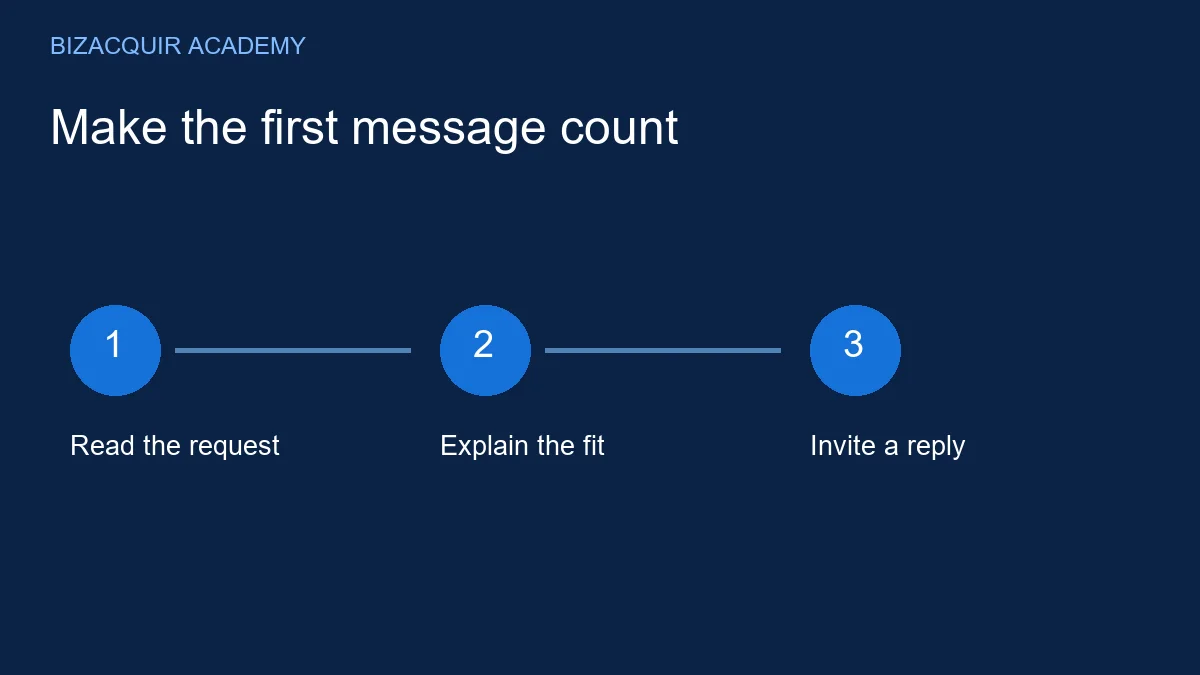
Example: I run a profitable Shopify homewares store with repeat customers and documented fulfillment. Your preference for owned inventory fits the business. I can explain the weekly workload and share a private summary here. Would that be relevant to your search?
This gives the buyer a reason to reply without revealing a domain, customer list or private financial file. The next exchange should clarify fit and the information needed for diligence. Use the Shopify introduction guide to adapt it to your business.
Make the next step easy to evaluate
After a relevant reply, agree the scope of information to review, the reporting dates and a realistic handover discussion. If you use a Confidential Listing, the buyer signs the NDA and receives access through that listing's approval process. An introduction does not unlock protected information.
A full listing can make continuing diligence easier. Listing is free; first submission requires a genuine successful financial connection and import. A business with genuine past revenue can qualify even if it is currently inactive. Explain its current condition rather than presenting historical sales as current performance.
Do not confuse interest with an offer
A reply, an NDA or a funds badge is not an agreed purchase. Keep track of what the buyer has actually requested, what you supplied and the next decision. Compare eventual offers on price, conditions, timing and handover commitments. Avoid reducing your price solely because one person is slow to reply.
Prepare your Shopify listing, or find buyers looking for businesses like yours.