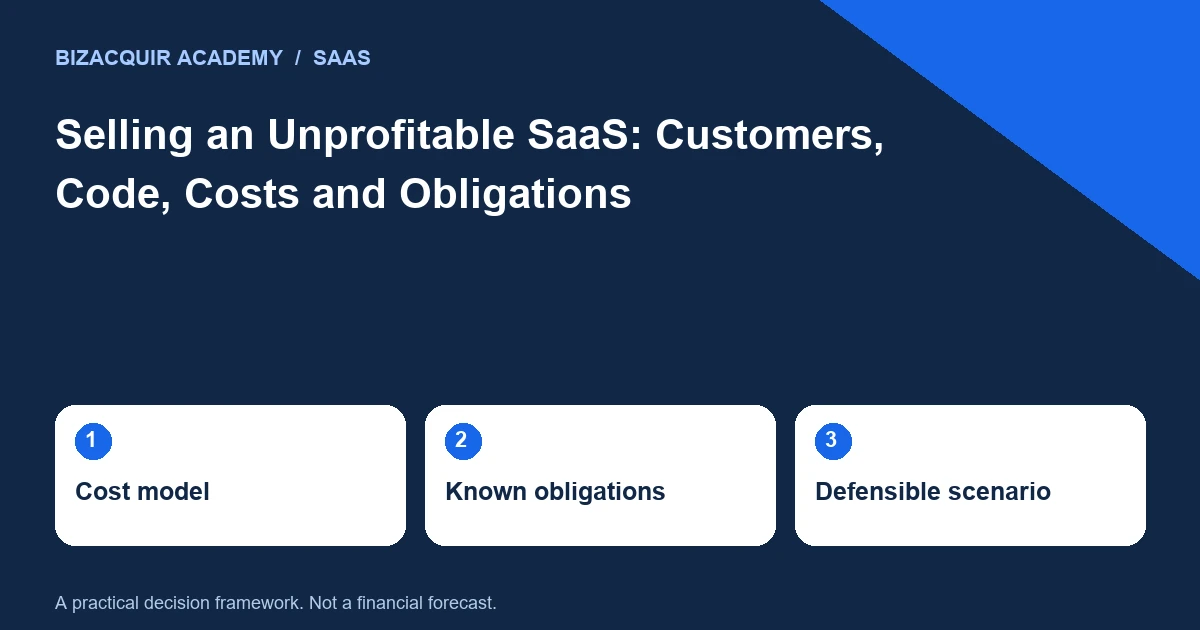
A loss-making SaaS can have real customer demand and still be expensive to run. A buyer needs a cost model that explains both the current loss and the work behind any proposed improvement. Code quality, obligations and customer concentration can matter as much as revenue.
Build a repeatable cost view
Use revenue and expenses for matching dates and currency. Include hosting, external APIs, payment costs, support, contractors, software and acquisition. Separate one-time development projects from recurring operations, but do not remove maintenance merely because the founder dislikes treating it as recurring. Explain owner labour. If the founder supports customers and deploys releases without a salary, a buyer may need a replacement cost. Avoid counting that cost twice when an existing contractor already performs the same work.
Find what changes with usage
| Cost type | Examples | Buyer’s question |
|---|---|---|
| Fixed | Base hosting, core tools | What is required even with no customers? |
| Usage-related | AI tokens, storage, external calls | What happens as usage increases? |
| Service-related | Support and onboarding | How much work does each customer create? |
| Maintenance | Dependency updates, defects | What backlog must be addressed? |
A flat average can hide an expensive customer segment. Use anonymized usage groups where useful, rather than exposing individual customers or proprietary records publicly.
Test a profitability scenario honestly
Hypothetical example: monthly revenue is USD 3,000 and costs are USD 3,600. A proposed migration might save USD 400 but require USD 2,000 of work; it still leaves a USD 200 monthly loss before any other changes. Show that result. Do not describe the business as profitable based on a saving that has not been implemented. If a buyer could use existing staff or infrastructure, that is the buyer’s potential synergy, not the seller’s current profit. Price discussions should distinguish the operating facts from a specific buyer’s possible advantages.
Review commercial and technical obligations together
Check annual subscriptions, service promises, refunds, support backlog and third-party terms. A cheap infrastructure move may break a contractual or technical requirement. A price increase may require notice or affect retention. Do not assume either change is immediate or consequence-free. Prepare a known-issues list and reproducible deployment documentation. Identify rights to code, designs and datasets. Keep API secrets and customer exports out of sale materials; use appropriate private access for diligence.
Choose an evidence-based sale proposition
Maintainable positive earnings support one kind of valuation. A business with no positive earnings may instead depend on usable assets, customer relationships and a credible transition plan. Those need evidence too. Original development spend and gross revenue alone do not create a guaranteed minimum value. On BizAcquir, genuine past revenue can qualify even when the business currently loses money. Connect the relevant account, preserve the imported figures and describe expenses separately. Give the buyer a clear explanation of the loss and the assets included, then negotiate from the actual situation rather than an optimistic future profit statement.
Check the relevant provider guidance
These official references support the platform-specific steps. Your own contracts, account configuration and agreed sale terms still need to be checked.
Test a saving without relabeling the current result
Create three columns: current observed cost, proposed change and evidence needed. A hosting migration may reduce one bill while adding engineering work or another service. A buyer’s existing team may create a buyer-specific advantage; it is not the seller’s present profit.
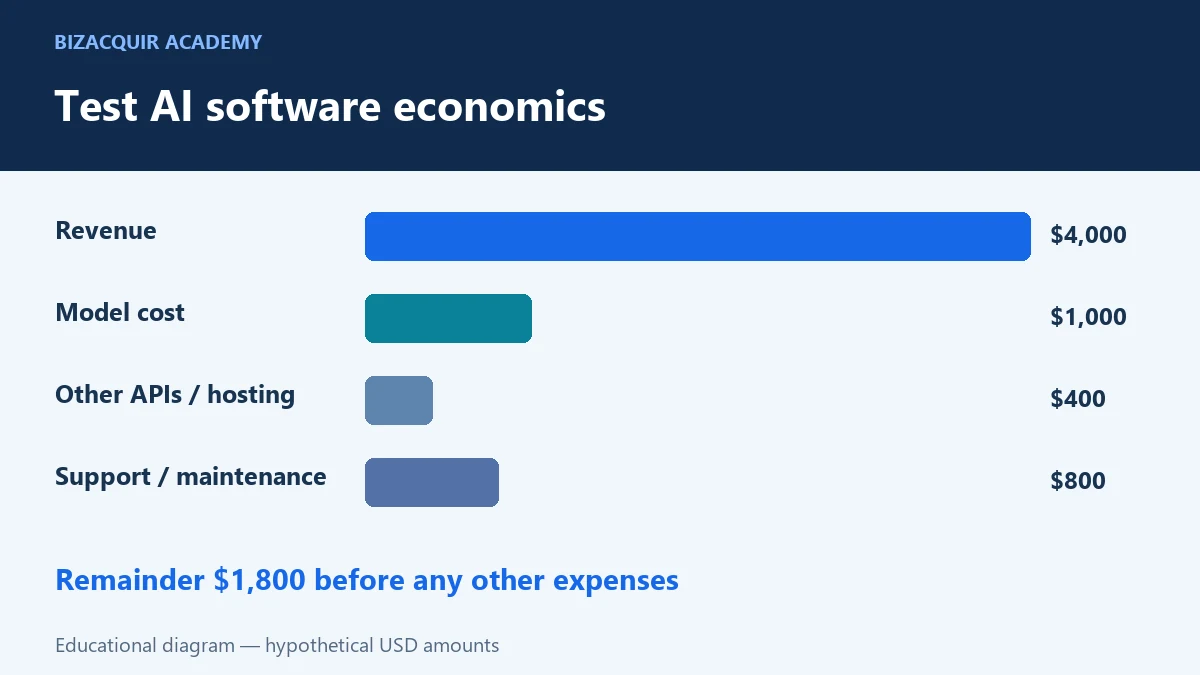
For AI usage exposure, see the AI micro-SaaS acquisition guide. Compare a heavier-usage scenario and explain whether cost controls are actually implemented, not merely possible.
Your next practical step
Use the SAAS selling checklist to turn the gaps into a preparation plan. You can start a private listing draft or explore a free valuation; signup or login is required to view valuation results.
Continue with Selling an Inactive SaaS Business With Historical Revenue and Selling a SaaS You No Longer Maintain: What Buyers Need.