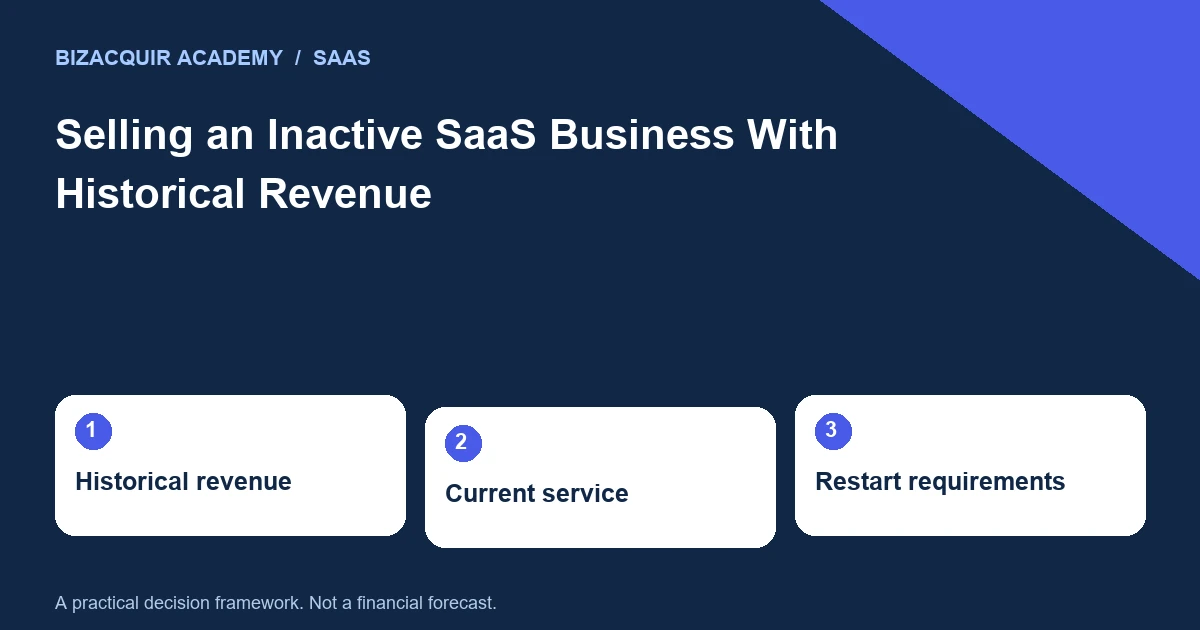
An inactive SaaS business may have useful software, a domain and a record of paying customers, but those assets do not automatically form a ready-to-run operation. Buyers need to understand the current service state and what they would have to maintain or rebuild.
Define the operating state precisely
Distinguish no new sales, no active paying customers, suspended development and a shut-down service. A product can stop marketing while still owing service to subscribers. Record the last deployment, last payment and date operations paused where known. Describe what a buyer can inspect safely: a working demonstration, documentation, a test environment or an archived product. Do not present a nonfunctioning application as live because its landing page still loads.
Separate historical revenue from current subscriptions
| Measure | Useful presentation |
|---|---|
| Historical collections | Amount, currency, dates and source |
| Current recurring revenue | Actual contracted recurring basis and as-of date |
| Active paying customers | Count and definition at a stated date |
| Hosting and service costs | Current recurring costs, including zero only when confirmed |
| Restart work | Known tasks, estimates and unresolved dependencies |
Hypothetical example: a product collected USD 24,000 two years ago and currently has no active subscriptions. It has historical revenue, not USD 2,000 current MRR. Its old customer count is not an active paying-customer count. A recent import of those old payments should keep the historical dates visible.
Review the technical package
Inventory repositories, domain, hosting, databases, deployment scripts, documentation and third-party services. Confirm code rights and licence restrictions. Check whether a buyer can build and run the product without the founder’s laptop or personal account. A GitHub repository transfer can move repository ownership under GitHub’s conditions; it does not transfer every service or commercial licence used by the application. Map those separately and identify any provider consent or replacement account required.
Account for obligations and restart costs
List annual prepayments, promised updates, unresolved support, refunds and data-retention commitments. Minimize customer data shared during diligence and consider the relevant privacy obligations before any transfer. A historical customer database is not unrestricted marketing permission. Estimate hosting, maintenance and migration work using a stated basis. Do not assign a value simply equal to the original development bill. If the product needs substantial repairs and has no current earnings, reviewing the remaining assets and restart work is more useful than multiplying former earnings as if they still continue.
Prepare a full-business listing
BizAcquir’s SaaS category is for full businesses with genuine past revenue, not standalone source-code or licence sales. Whop, Stripe or Shopify can support the connection requirement when the authorized account genuinely relates to the business and completes a successful import. Current zero revenue is allowed; a never-revenue project is not. Save your draft, identify the operation as Inactive and explain the reporting period. Keep seller-provided technical details separate from imported financial figures. The buyer should leave the listing knowing what exists, what works and what must happen before reliable service resumes.
Check the relevant provider guidance
These official references support the platform-specific steps. Your own contracts, account configuration and agreed sale terms still need to be checked.
Use the seller workspace
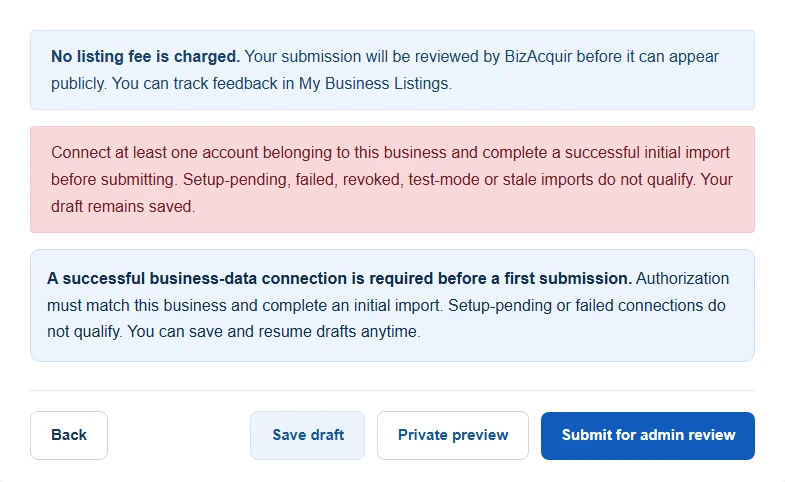
The seller submission screen illustrates how missing requirements are identified before review. Synthetic tutorial example. Open the image to inspect the controls.
Separate recovery from growth
A restart checklist should first establish whether the software builds, the service can run and the promised functions still work. Only then consider how to acquire customers. A former customer list is not permission for unrelated marketing or proof that customers will return.
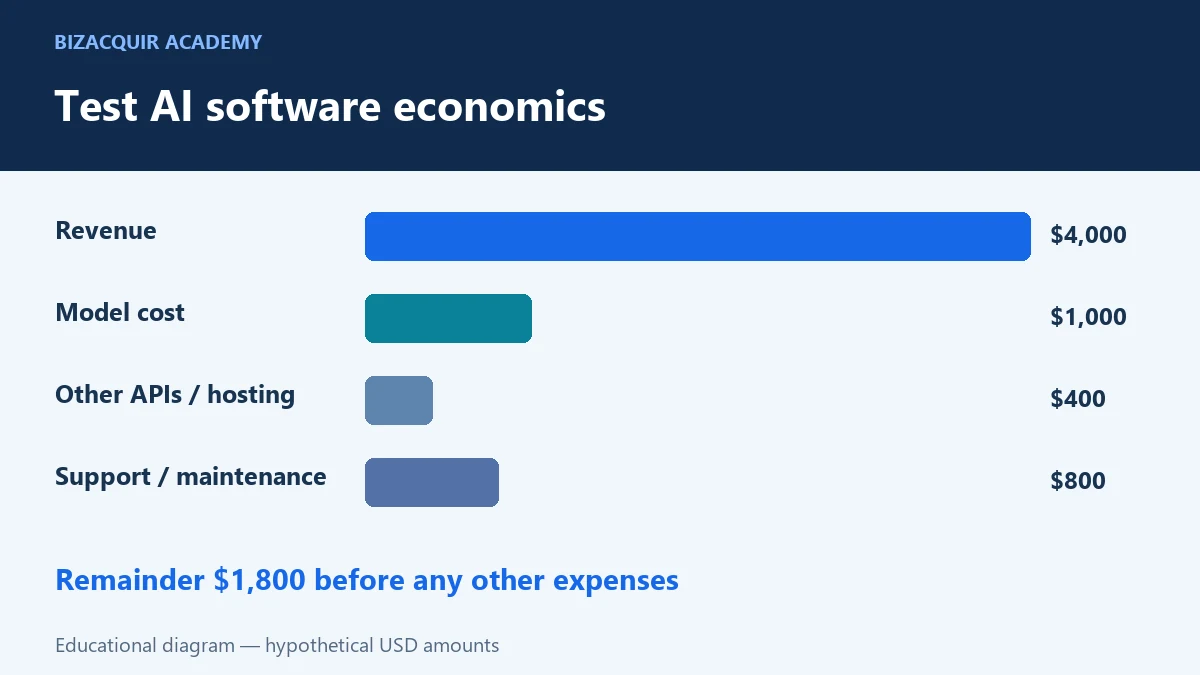
If the product uses metered AI or external APIs, use the usage-cost and dependency review. Keep the historical revenue period distinct from any current subscription figure and do not automatically assign a generic revenue multiple.
Your next practical step
Use the SAAS selling checklist to turn the gaps into a preparation plan. You can start a private listing draft or explore a free valuation; signup or login is required to view valuation results.
Continue with Selling a SaaS You No Longer Maintain: What Buyers Need and Selling an Unprofitable SaaS: Customers, Code, Costs and Obligations.