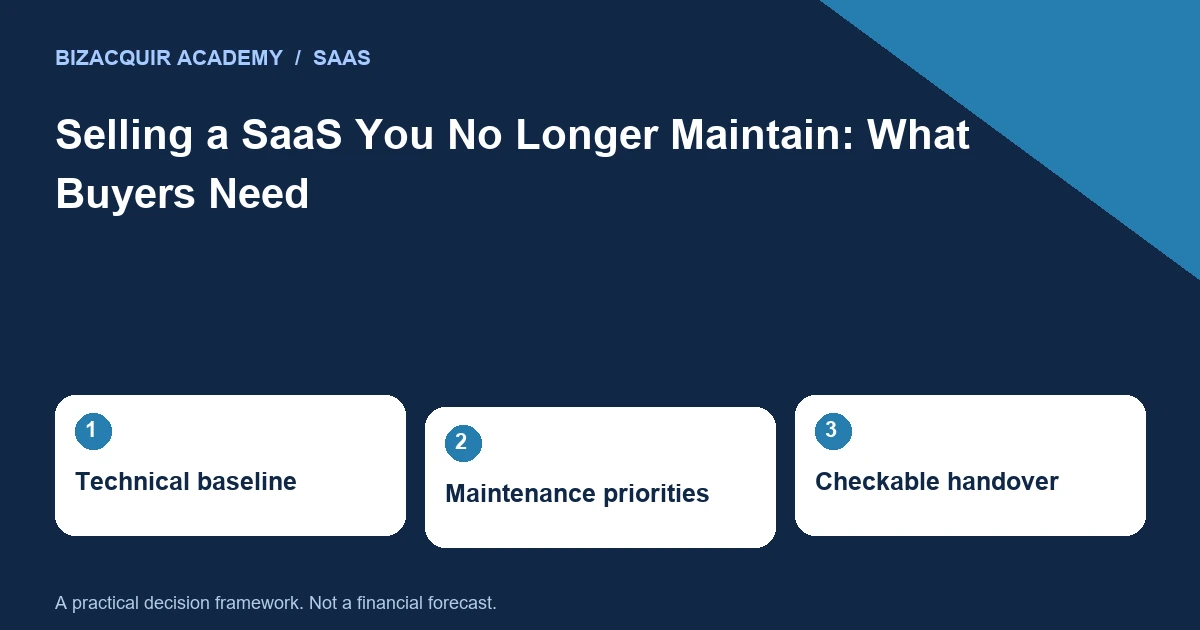
Stopping development does not always stop a SaaS from running. It can, however, make its operation harder to understand and its dependencies less predictable. A buyer needs a candid maintenance picture and a practical way to assess the product without receiving uncontrolled access to production.
Establish a dated technical baseline
Record the last release, runtime versions, hosting services, build process and known incidents. List unsupported dependencies and failing functions. Distinguish a confirmed issue from something not yet checked. Do not claim “no vulnerabilities” because no one has looked recently. Create a clean backup and verify how restoration works in an appropriate test environment. A backup file that has never been restored is weaker evidence than a documented recovery procedure.
Make the product reproducible
| Area | Useful handover evidence |
|---|---|
| Build | Versions, installation steps and required configuration names |
| Deployment | Repeatable procedure and rollback steps |
| Operations | Monitoring, backups, scheduled jobs and failure handling |
| Dependencies | Service owner, purpose, recurring cost and transfer restriction |
| Maintenance | Prioritized defects and update work |
Use placeholder values in documentation. Never publish production credentials, private keys, raw customer data or access tokens in a listing or tutorial. Plan secure access changes and rotation as part of the agreed handover.
Prioritize the backlog by consequence
Separate service-breaking defects, security or privacy concerns, maintenance debt and optional improvements. Give each item an observed symptom, affected component and evidence date. If you have a cost estimate, identify who prepared it and its assumptions. Hypothetical example: the payment entitlement check works, but the welcome-email job has failed for two months and an external API version is being retired. A buyer needs both issues in the pack. Showing only the working login screen would not demonstrate that the service can be operated reliably.
Clarify customer obligations before changing anything
Determine whether active or prepaid customers still expect support and service. Explain planned maintenance or migration requirements within the applicable commitments. Do not terminate customer access simply to simplify a sale, or assume a buyer may repurpose customer data for unrelated marketing. If the service is already offline, say so. Record what remains recoverable and which provider accounts or permissions are needed. An abandoned product may require an asset-oriented evaluation rather than a current-earnings valuation.
Define a handover a buyer can check
Agree included repositories, domain, infrastructure arrangements, documentation and service access. GitHub, hosting providers and other services have separate transfer rules; a repository transfer does not move the entire operation. Identify who performs each change and how the buyer will verify it. Use BizAcquir’s listing and private deal workflow for the full business sale. Genuine historical revenue may qualify even with current zero revenue, but the connection requirement remains. Buyer inspection and explicit acceptance should address the agreed version of the handover, including disclosed maintenance limitations. A sale should transfer an understood responsibility, not an undocumented surprise.
Check the relevant provider guidance
These official references support the platform-specific steps. Your own contracts, account configuration and agreed sale terms still need to be checked.
Make the next maintainer’s first day practical
Give the buyer a dated task list with the observed issue, the affected function and how to check a repair. Separate urgent service or privacy concerns from optional enhancements. A long backlog is more understandable when its consequences and dependencies are visible.
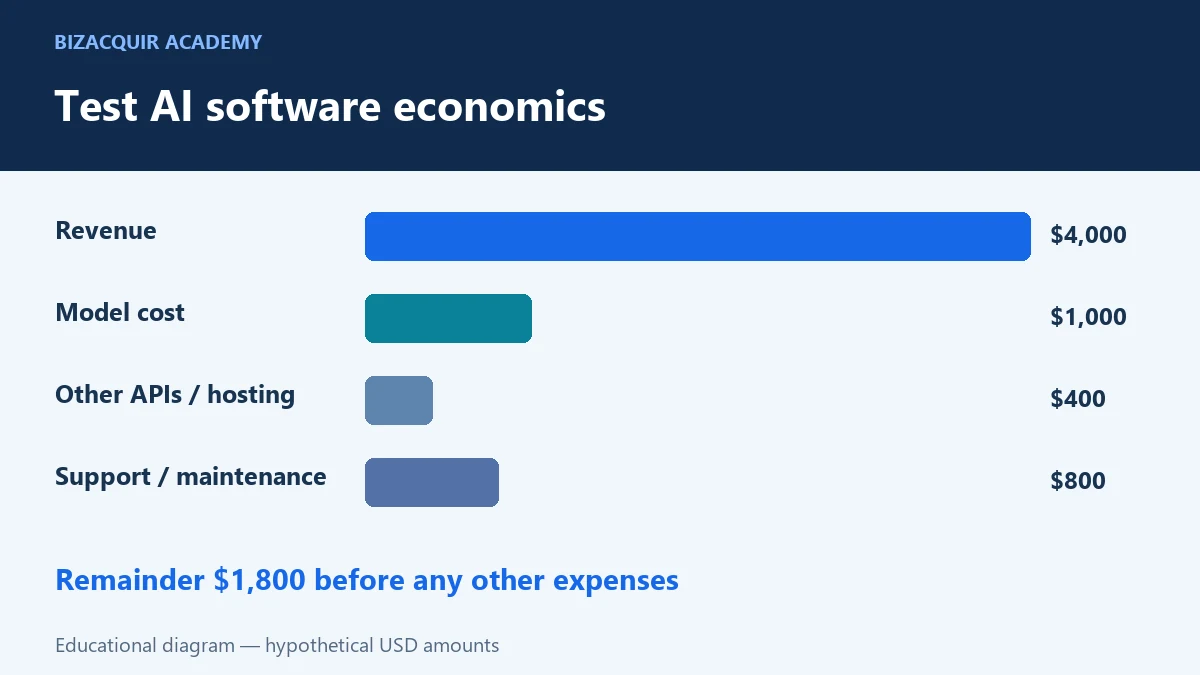
For each external service, record the supported access or transfer route and any unresolved approval. Do not include secrets in the documentation. If AI services are material, add the model-cost and rights checklist to the pack.
Your next practical step
Use the SAAS selling checklist to turn the gaps into a preparation plan. You can start a private listing draft or explore a free valuation; signup or login is required to view valuation results.
Continue with Selling an Inactive SaaS Business With Historical Revenue and What to Include in a Whop Business Sale.