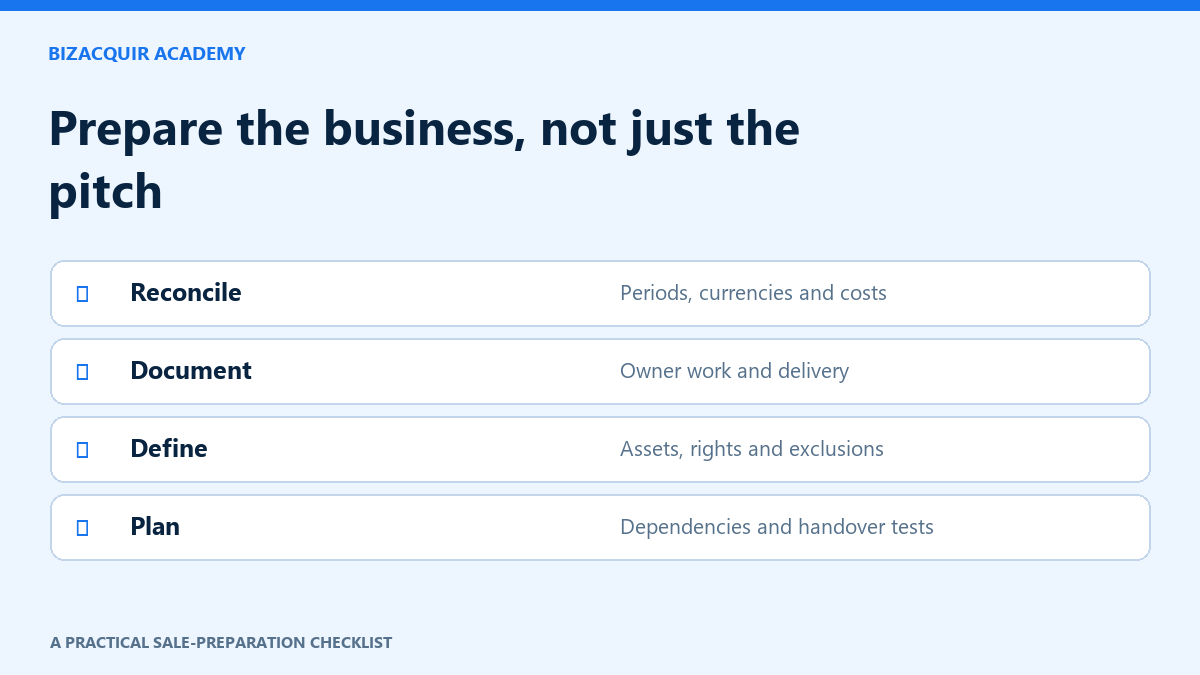
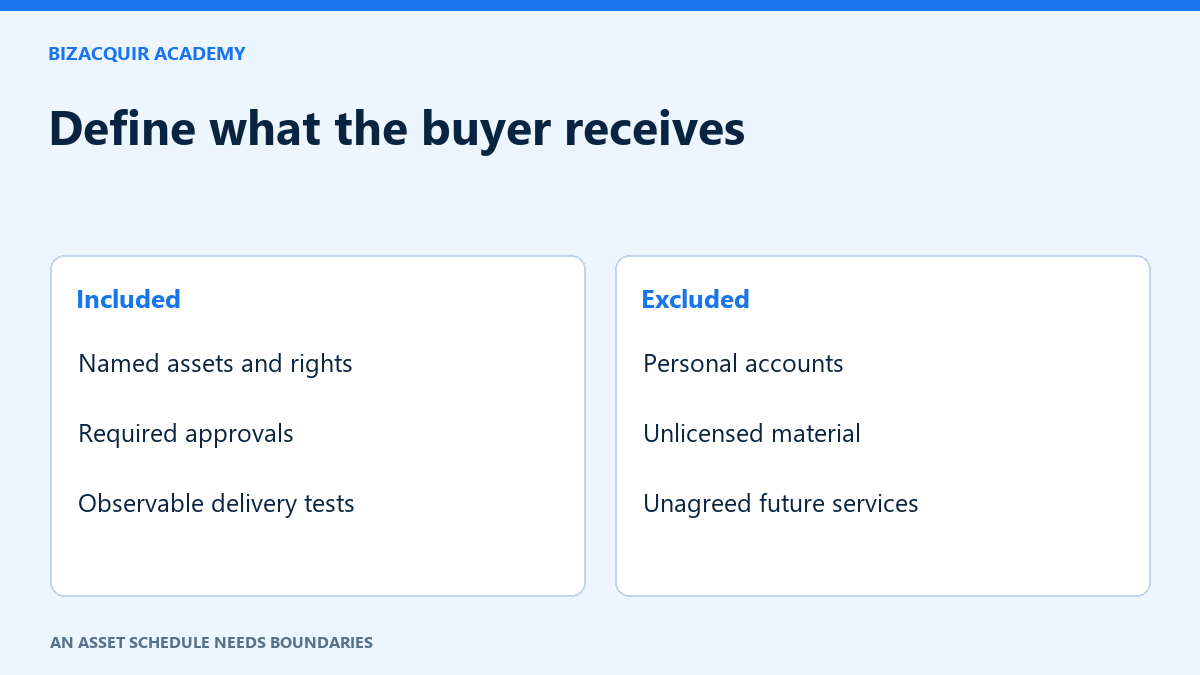
“The whole business” is not a sufficiently precise asset list. It can hide disagreements about content rights, personal social profiles, customer obligations and third-party tools. Write an inventory that another person could use to check delivery.
Create an asset register with four decisions
For each item, record who controls it, whether it is included, what permission or process is required and how the buyer will confirm delivery. Include an explicit exclusion list. Keep passwords, tokens and personal recovery codes out of the register.
| Asset or dependency | Questions to settle |
|---|---|
| Brand and original content | Who owns the rights? Are third-party materials excluded or licensed? |
| Whop business and products | What account-specific transfer process does Whop require? |
| Community spaces | Which servers, channels, moderation tools and roles are included? |
| Domain and website | Who controls the registrar, hosting and necessary code? |
| Software and supplier tools | Can the licence or contract transfer, or must the buyer obtain a new one? |
| Team and support | Which continued services are actually agreed? |
Distinguish access from legal and operational control
Being invited to a dashboard does not settle ownership of the business, its intellectual property or a contract with a payment provider. Whop’s documented team roles describe access privileges. The documented transfer of a member’s subscription is a different operation again. Do not substitute either for confirmation of the business sale’s requirements.
Ask each relevant provider what the proposed ownership change requires. Record the response, any restrictions and the party responsible for completing the process. An asset that cannot transfer may need to be excluded, replaced or addressed before agreement.
Account for obligations that travel with the offer
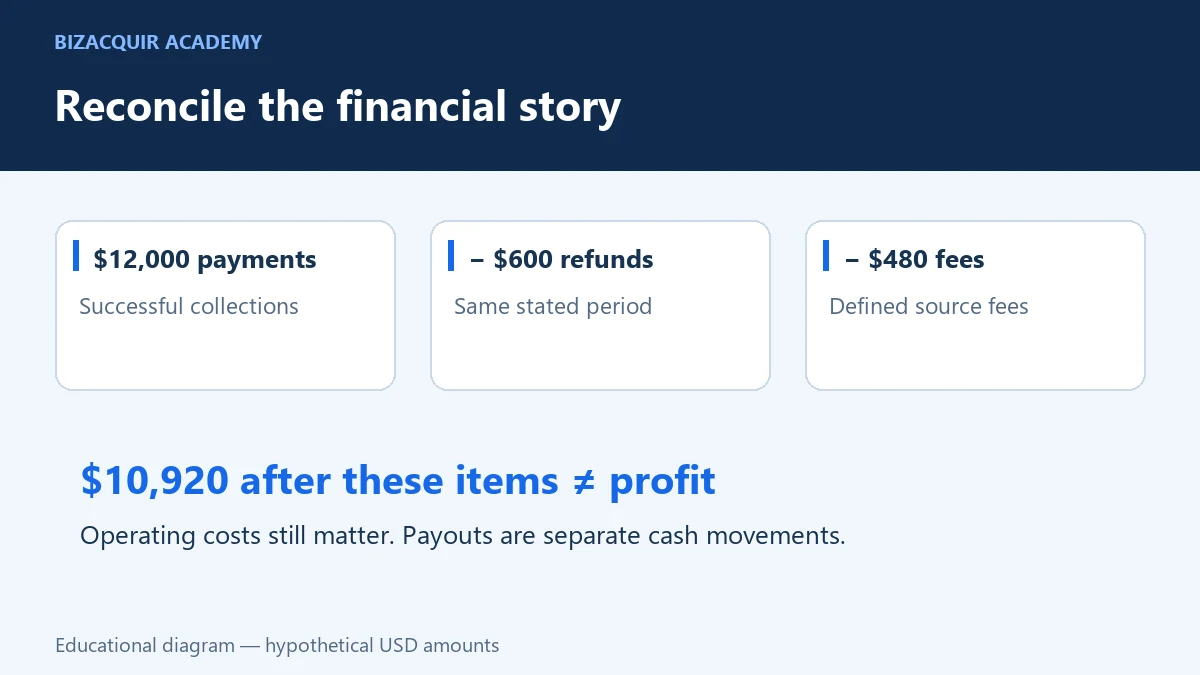
Annual memberships, prepaid coaching, unused credits and promised future content can create continuing work. Record the scope and who is responsible after completion. Do not treat all recent collections as unencumbered profit simply because the cash has arrived.
Include refund and support responsibilities in the agreement where relevant, with appropriate professional advice. A marketplace checklist organises the process but does not decide contractual obligations by itself.
Define observable acceptance tests
Use tests tied to the asset, such as opening the agreed course archive, administering a permitted community role, updating a domain record or running a documented operating task. The buyer should use their own authorised account. A forwarded screenshot or seller declaration is evidence of a step, not automatically the buyer’s acceptance.
Identify dependencies between tests. Domain access may need to precede a branded email change; supplier confirmation may need to precede a fulfilment transition. Schedule changes to reduce disruption to members.
Keep the inventory current through negotiation
Version the agreed list. If a material asset, exclusion or delivery obligation changes, obtain fresh agreement to that version. In BizAcquir, handover acceptance is linked to the agreed version; earlier acceptance should not stand in for a changed obligation.
Keep private evidence in the permitted workspace and use a separately agreed secure transfer method for sensitive access. BizAcquir is not a password vault. Do not paste credentials into ordinary deal messages or public listing fields.
Use an asset schedule with a delivery test
For a hypothetical learning community, the schedule could look like this. The examples illustrate the level of specificity; they do not establish that these assets can transfer in your business.
| Item and boundary | Dependency | Delivery test |
|---|---|---|
| Original course archive; third-party templates excluded. | Confirm ownership and licensed material. | Buyer opens the agreed files and the rights schedule matches them. |
| Community space and moderation instructions. | Provider-supported ownership/access change. | Buyer's named account performs the agreed moderation task. |
| Business domain and website files. | Registrar process and hosting arrangement. | Buyer controls the domain and a reversible test change works. |
| Two transition training sessions. | Agreed scope, scheduling and responsible person. | Sessions delivered and operating questions recorded. |
Do not place passwords or recovery codes in this schedule. List the secure handover method and responsible person instead.
Separate included assets from promises of future service
A file can be delivered once; continuing coaching or moderation is an obligation over time. Put each on the right part of the schedule. Specify any limits on transition help and how unfinished work will be recorded. A seller's personal profile, audience relationship or third-party licence should not be included merely because it helps the business today.
Before agreeing, read the exclusion list aloud together. If the buyer expects an advertising account but the seller means only its creative files, resolve that now. Update the agreed version after a material change and make the final inspection tests refer to it. This protects both sides from accepting different interpretations of “everything included.”
Your next step
Ready to prepare your sale? Sell your Whop business or get a free valuation. Create an account or sign in to view your private estimate.
- Founder-Owned vs Business-Owned Assets: What Goes Into the Sale?
- How to Plan a Whop Business Handover
Sources and useful references
Give every asset a completion check
An asset line should say what is included, the supported transfer route and how the buyer will confirm receipt. “Community” is too broad if the server, paid access, bots and content have different owners. Separate technical access from rights to use and sell the material.
| Check | Useful answer |
|---|---|
| Domain | Confirm registrar process and working control after the change. |
| Original content | Record the rights included and any excluded third-party material. |
| Software | Confirm repository, build instructions and service dependencies. |
| Staff relationship | Record actual agreement, not an assumed continuing commitment. |