Preparing for sale means making the business understandable without relying on your memory. A buyer needs to know what produces revenue, what work keeps it running and what they could actually receive. Start with an evidence pack and an asset map before polishing the listing.
Create a consistent financial record
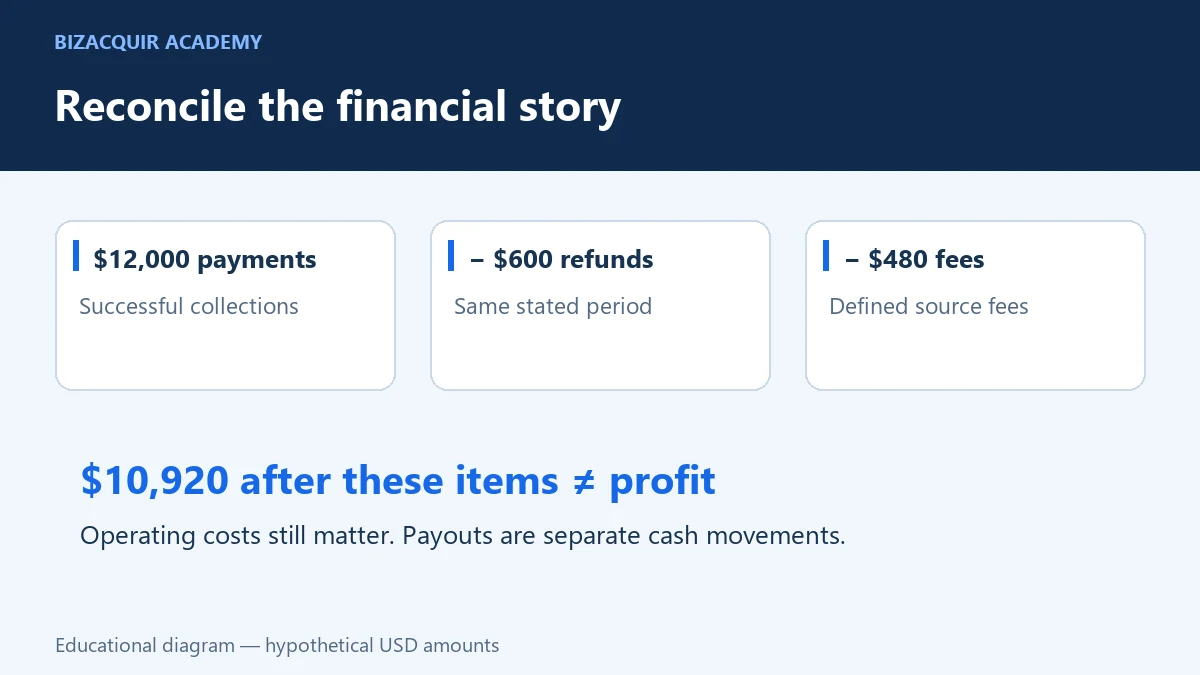
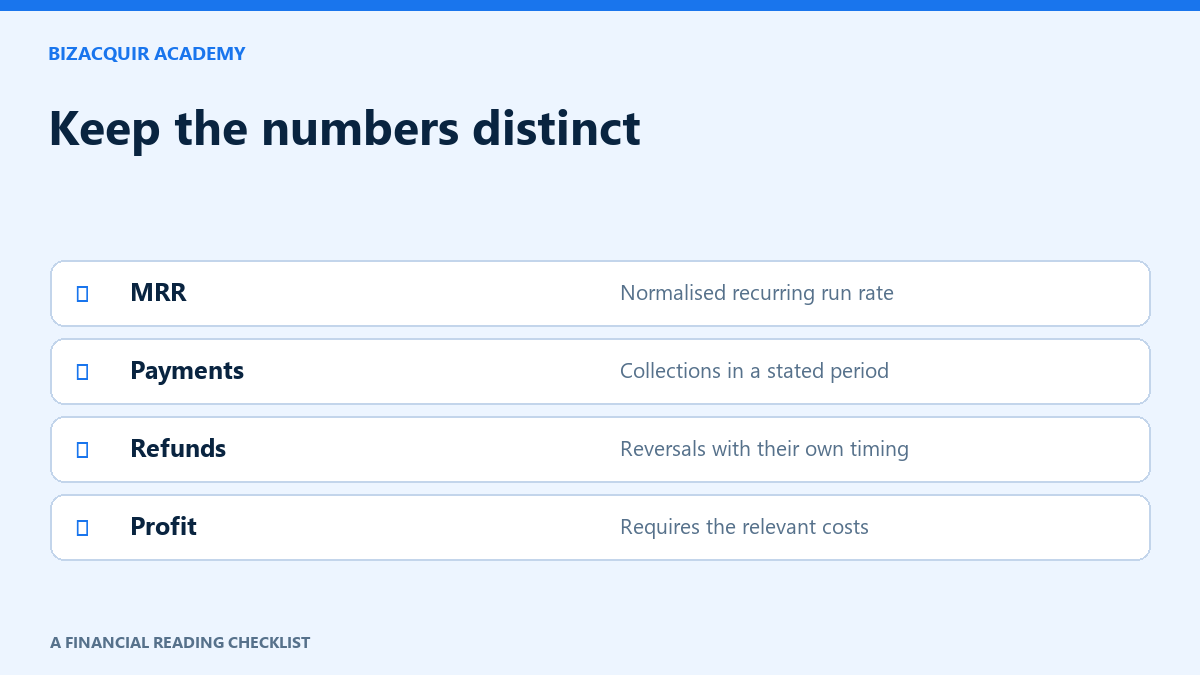
Choose completed reporting periods and keep the original exports or records supporting them. Separate recurring subscriptions, one-time sales, refunds, disputes, platform fees and operating costs. Reconcile the story to the business’s actual financial records; a payout total alone is not revenue.
Explain unusual months rather than deleting them. A launch, promotion, paused product or large refund can be material. Document owner work and any replacement labour assumption used in a profit figure. Do not call discretionary adjustments “verified profit” simply because you can explain them.
Document how the business operates
| Area | Useful preparation |
|---|---|
| Delivery | A schedule of content, calls, tools or other promised services. |
| Owner involvement | Recurring tasks, actual time commitments and work only you can do. |
| Team | Responsibilities, agreements and whether continued involvement is confirmed. |
| Acquisition | Channels, costs and evidence for attributed sales. |
| Dependencies | Apps, data suppliers, licences and platform permissions. |
A personal audience can be valuable but difficult to transfer. Be explicit when members are buying access to you. Do not promise a replacement instructor, moderator or supplier will stay unless that arrangement exists.
Check what can be transferred
List every proposed asset and the person or entity controlling it. Distinguish business content you own from licensed tools, customer subscriptions, a Discord server and a payment-processing relationship. Whop’s team permissions and a member subscription transfer are different from a complete business-ownership transfer.
Ask Whop support to confirm the appropriate process for your specific business and account structure before making transfer commitments. Keep any requirements or limitations in the handover plan. Repeat that check for domains, apps and other providers; access to one dashboard is not evidence that every dependency is transferable.
Prepare a public listing and a private evidence pack
Your public summary should explain the offer, audience, operating model and reason for selling without exposing member identities or access secrets. Private evidence can support the claims where the marketplace’s permissions allow it. Redact unnecessary personal information and never publish customer lists as proof of audience quality.
On BizAcquir, platform, business category and revenue model are separate selections. Asking Price and Buy Now are separate amounts. A connection supplies source-labelled financial data; identity review and BizAcquir Vetted are separate checks. Do not treat any one of these as a substitute for the others.
Run a buyer-readiness check
- Can another person reconcile the financial periods?
- Is every material dependency named?
- Are exclusions and continuing obligations explicit?
- Can the buyer operate the offer without an undocumented personal favour?
- Does the reason for selling agree with the rest of the information?
Use the gaps as a preparation list. A clear limitation is easier to evaluate than a surprising dependency discovered during handover. When ready, prepare a draft listing and use the review feedback to correct omissions before publication.
A preparation checklist you can actually work through
Copy this checklist into your sale preparation notes. For each item, record an owner, a dated source and anything still missing. “Ready” should mean someone else can understand the evidence, not just that a file exists.
- Financial periods: a month-by-month schedule with currency, revenue basis, refunds, fees and operating costs; incomplete months flagged.
- Subscription mix: monthly, annual, one-time, discounted and free access separated, with the date of each count.
- Member retention: defined opening cohorts, departures and reactivations, with no identifiable member export in the public pack.
- Owner work: a task log that includes delivery, support, moderation, acquisition and administration.
- Included assets: an itemised inventory, exclusions, rights and transfer dependencies.
- Continuing obligations: prepaid service, promised sessions, refunds, supplier commitments and agreed staff involvement.
- Presentation: the correct business URL saved privately for review, representative images, a clear summary and separate sale prices.
- Handover: a proposed sequence with a test for each material asset and a person responsible.
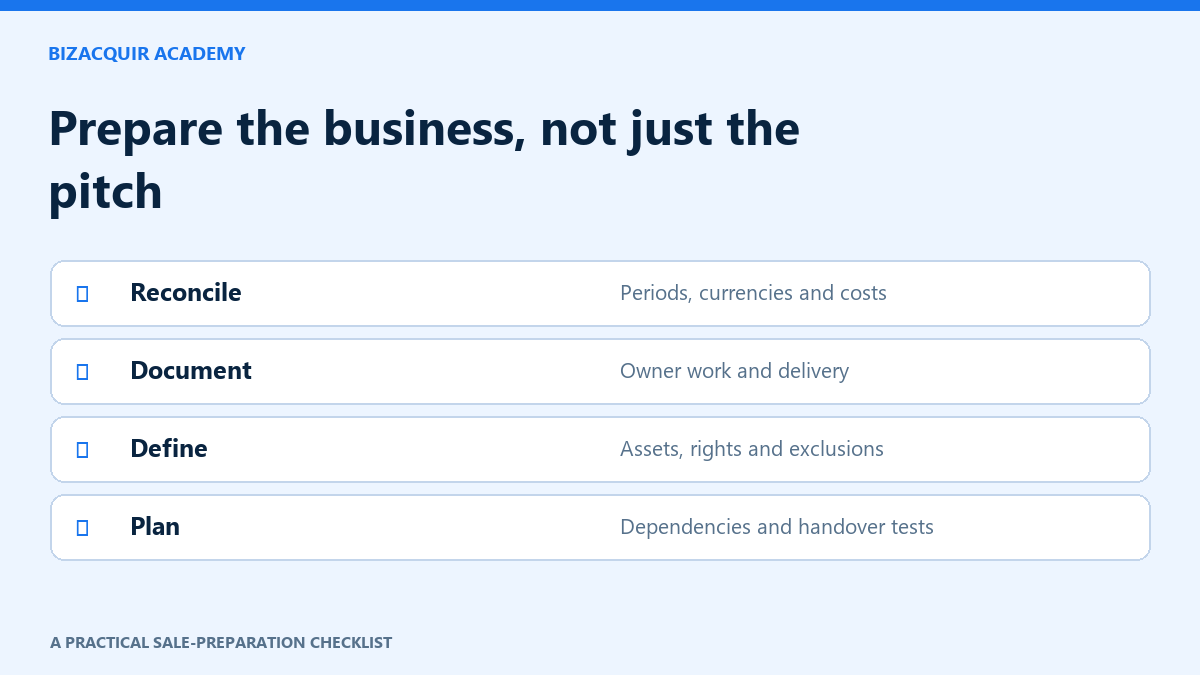
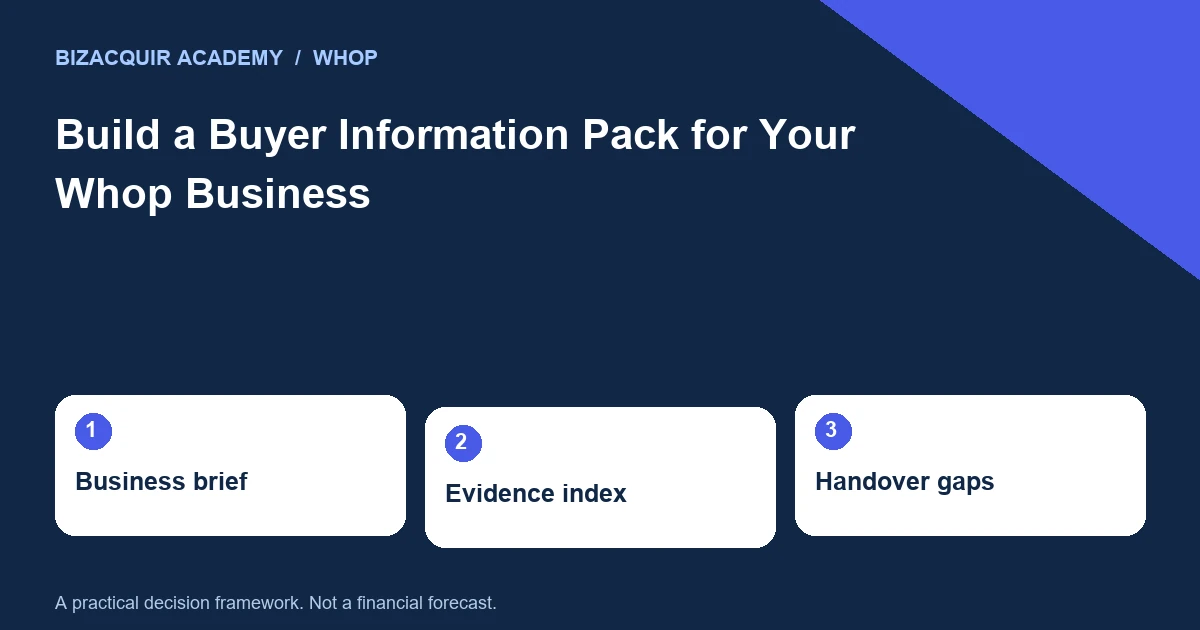
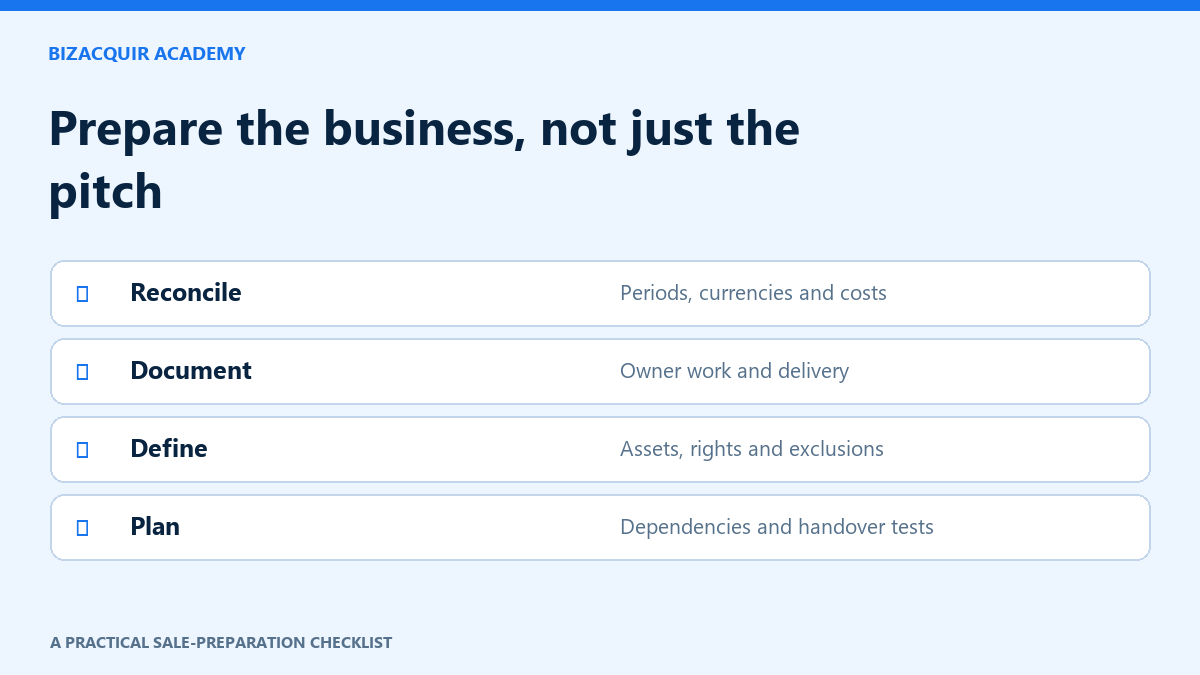
Original preparation worksheet diagram: reconcile the records, define the assets and prove the operating process.
Turn an owner-work log into a buyer-readable operation
For a representative week, write down what you actually do and how long it takes. Separate scheduled work from exceptional interruptions. A hypothetical log might include two hours preparing a lesson, two hours running a session, three hours answering questions and one hour handling account issues. Do not present those eight hours as your business's workload unless measured.
For each task, link to the instruction or resource a replacement operator would use. “Moderate the group” is vague; “review the flagged-post queue, apply the published rules and record unresolved cases” is testable. Identify tasks that depend on your personal reputation or specialist judgement. They may need a transition plan, a qualified replacement or a narrower sale promise.
Prepare a private evidence index, not a public data dump
| Question | Evidence to organise | Public summary |
|---|---|---|
| Are earnings understandable? | Dated source reports and a reconciliation. | Period, currency and calculation basis. |
| What does the buyer operate? | Task instructions, delivery calendar and dependency list. | Workload and principal responsibilities. |
| Can included assets move? | Provider guidance, licences and relevant agreements. | Included assets and unresolved approvals. |
Keep credentials out of every pack. Customer-level records should only be shared when necessary, lawful and through an appropriate private route. A public screenshot can often teach the buyer about the product without revealing a member's identity or message.
Resolve the gaps that would derail a sale
If records disagree, reconcile them before advertising a single clean number. If a founder-led service cannot continue without you, state the limitation and proposed transition. If Whop or another provider has not confirmed an account change, mark that dependency rather than promising an immediate transfer.
You can save a BizAcquir draft while gathering these materials. Before first submission, complete the required business information and a genuine business-data connection with a successful initial import. Use the illustrated listing guide to check the saved preview and submission state. Preparation reduces avoidable questions; it does not guarantee approval or a sale.
Prepare for the first serious buyer enquiry
Give a buyer three concrete starting points: a dated earnings summary, the assets included, and a short account of the work you do each week. For a cook group, name the alert sources, bot licences and moderator coverage. For a course, identify content rights and remaining student support. For software, explain deployment and ongoing service costs.
Keep the asking price separate from the explanation of earnings. If someone asks why the price is justified, share the assumptions behind it and the relevant records through the permitted private route. Avoid responding with only your best revenue screenshot. The sale page is the starting point; the information pack should answer the questions it raises.
Your next step
Ready to prepare your sale? Sell your Whop business or get a free valuation. Create an account or sign in to view your private estimate.
Sources and useful references
Run a sale-readiness rehearsal
Ask an authorized reviewer to explain the business from your pack: what customers buy, what it earns, what it costs and what will transfer. Where they cannot answer, add the missing record or a clear outstanding question. This is a practical quality check, not a substitute for provider permissions or professional advice.
| Check | Useful answer |
|---|---|
| Financial story | Matching periods, currencies, refunds and operating costs. |
| Asset boundary | Owned, licensed, excluded and shared items distinguished. |
| Continuity | Remaining member obligations, workload and transfer dependencies. |
| Next action | A named task for each unresolved gap, without claiming it is already complete. |
Start with financial report reconciliation before deciding whether a difference is a real earnings issue.
Make the financial pack and operation repeatable
Begin with a completed reporting period and list which records explain revenue, refunds, fees and operating costs. Keep currencies and provider businesses separate. Next, record the recurring work required to deliver what members bought. A buyer needs both an earnings explanation and a workable service handover.
Reconcile the financial reports using the printable worksheet, then test founder independence. These checks support preparation; they do not replace the financial connection needed before first submission.