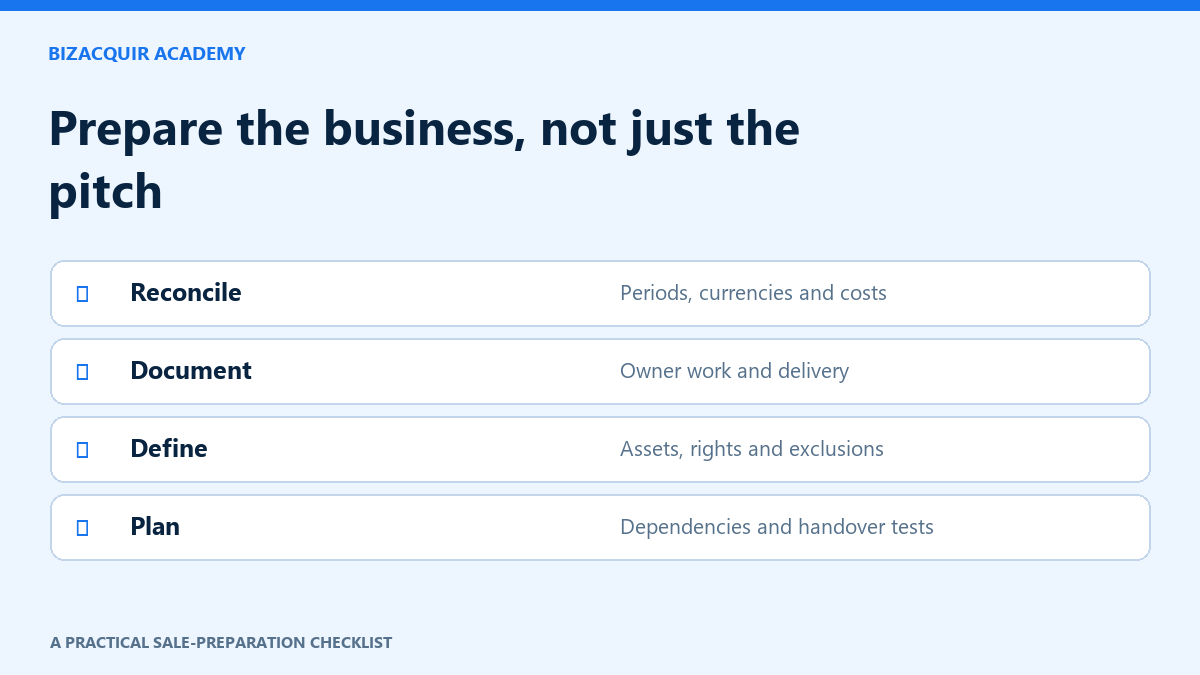
A buyer information pack should help someone understand and check the business without making them search through a folder of unrelated screenshots. Build a clear index first, then add only material that answers a real diligence question.
Start with a one-page business brief
Explain the offer, target customer, revenue model, operating status and reason for selling. Add the reporting dates used throughout the pack. Summarize included assets and the founder’s workload. Avoid claims such as “fully passive” unless the operational evidence genuinely supports them. State what is still being investigated. A concise gap list is more useful than a polished document that conceals missing contracts or incomplete financial history.
Use a question-led folder structure
| Buyer question | Pack section | Useful contents |
|---|---|---|
| What am I buying? | Assets and scope | Ownership map, inclusions and exclusions |
| What has it earned? | Financial history | Source definitions, monthly periods and costs |
| What must continue? | Obligations | Membership terms, support and refunds |
| How does it operate? | Operations | Task list, team and dependencies |
| How will it transfer? | Handover | Proposed sequence, prerequisites and checks |
Keep a dated index and revision note. Name documents descriptively, using their period and purpose rather than “final-final.” Do not put passwords or API keys in the pack.
Reconcile financial sources before sharing
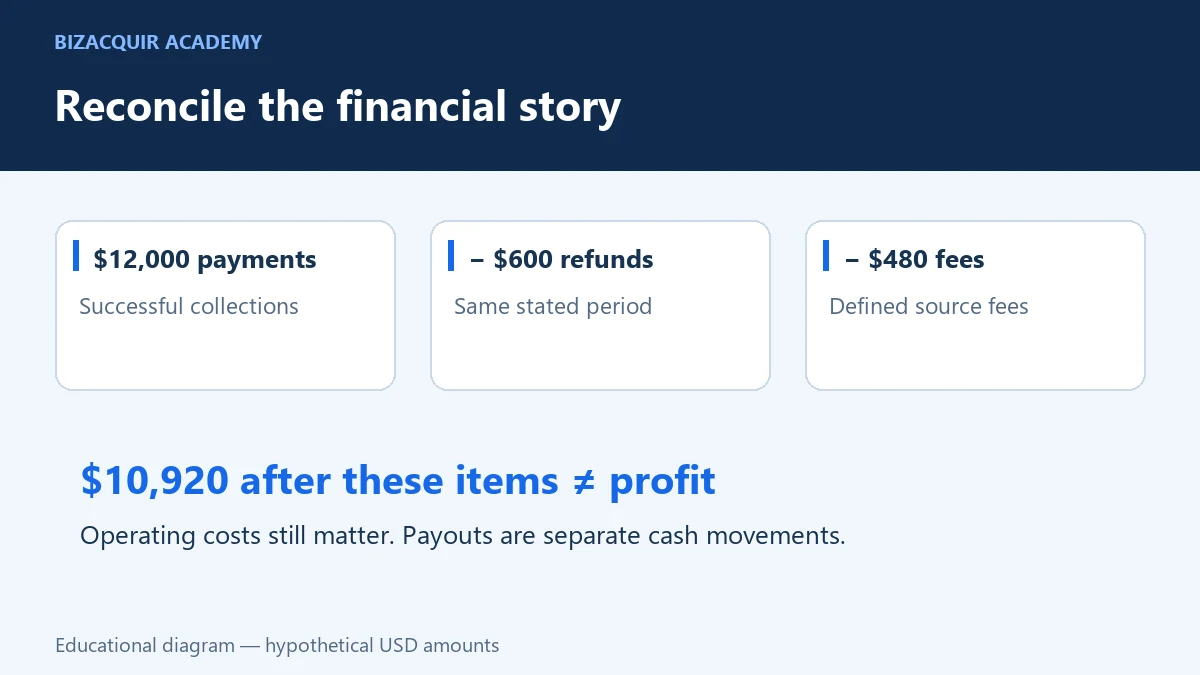
Connect the relevant account in BizAcquir and explain what each imported figure represents. Add seller-provided expenses separately. If Whop and Stripe include the same activity, present them as overlapping views, not additive revenue streams. Hypothetical example: your pack contains USD 24,000 of Whop gross volume and USD 20,000 of Stripe captured payments. The correct next step is to explain dates, coverage and refunds—not advertise USD 44,000 revenue. Note any difference you cannot yet reconcile.
Use staged disclosure
The public listing should help buyers decide whether to enquire. It should not contain private member lists, confidential contractor terms or unrestricted access links. Share minimized information for the specific question and use the marketplace’s permitted private channels and documents. For operational examples, redact names and identifiers. A sample support process can demonstrate the work without revealing a member’s personal circumstances. Check screenshots, file names and document properties before sharing.
Turn gaps into an action list
For each missing item, record who can obtain it and what depends on it. Examples include confirming a licence transfer, updating a deployment guide or clarifying remaining annual-member obligations. Do not mark a third-party approval complete merely because you asked for it. Before negotiation, ask a reviewer to use the pack to explain the business back to you. If they cannot tell which costs recur, which assets transfer or what remains owed to members, improve the relevant section. A well-organized pack does not guarantee a sale, but it reduces avoidable confusion and gives both parties a better basis for agreed terms.
Use a dated index the buyer can navigate
| Example document | Question answered | Next check |
|---|---|---|
| Revenue and costs, January–June, USD | What happened during this period? | Reconcile source totals and explain gaps. |
| Assets and exclusions, revision 2 | What is actually included? | Confirm rights and transfer dependencies. |
| Weekly operating tasks | What work will the buyer inherit? | Test one task with the runbook. |
These are example file descriptions, not customer records. When a figure changes, update the relevant document and its date instead of sending a disconnected screenshot. Keep sensitive supporting material private and share only what the question requires.
Check the relevant provider guidance
These official references support the platform-specific steps. Your own contracts, account configuration and agreed sale terms still need to be checked.
Use the seller workspace
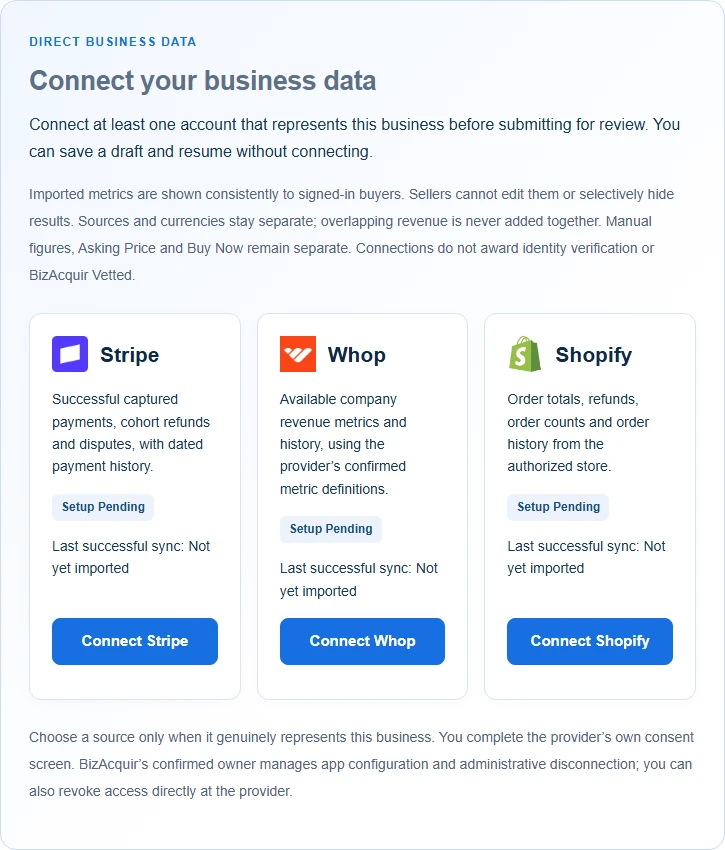
The seller connection step. An available Connect action begins provider consent; this tutorial screenshot is not evidence of a successful import. Open the image to inspect the controls.
Give the buyer a short exception log
Add a table with the question, the available evidence, the unresolved difference and the next action. Examples include an incomplete month, an unexplained fee difference or a licence requiring consent. A pack is more useful when it makes uncertainty easy to find.
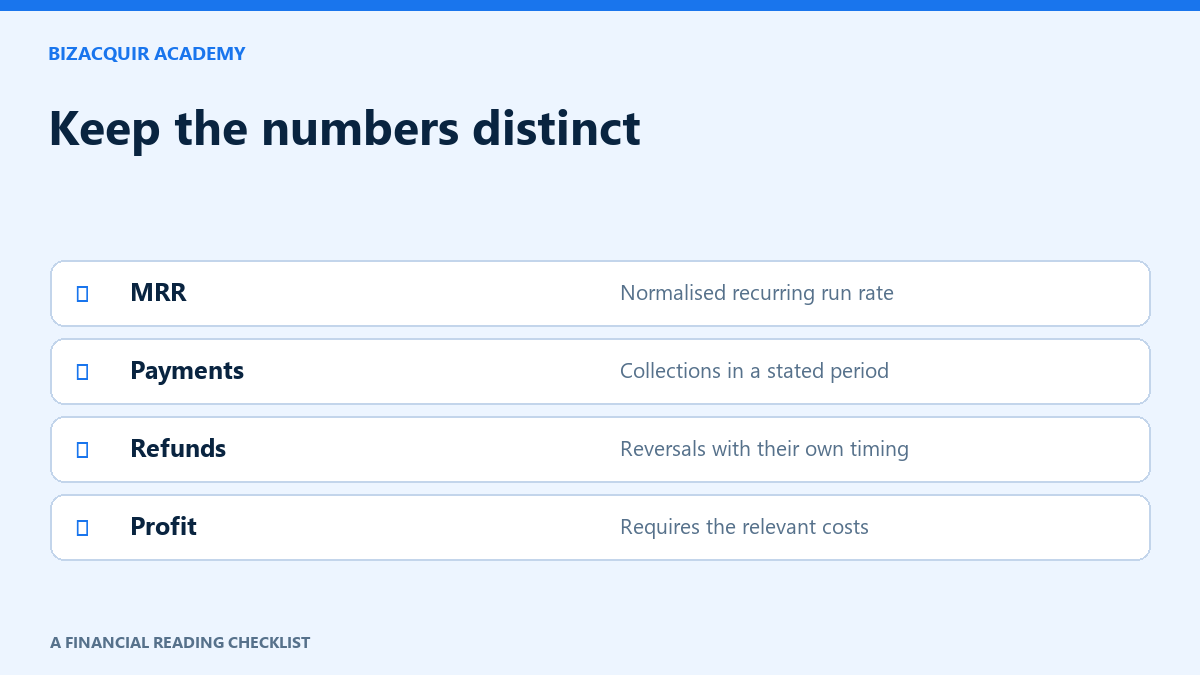
Start with the financial reconciliation worksheet. Then check that each figure in the one-page summary uses the same definition as its supporting record. Do not let a screenshot caption claim profit where the source only shows gross volume.
Your next practical step
Use the WHOP selling checklist to turn the gaps into a preparation plan. You can start a private listing draft or explore a free valuation; signup or login is required to view valuation results.
Continue with How to Prepare Your Whop Business for Sale and What Buyers Check Before Buying a Whop Business.