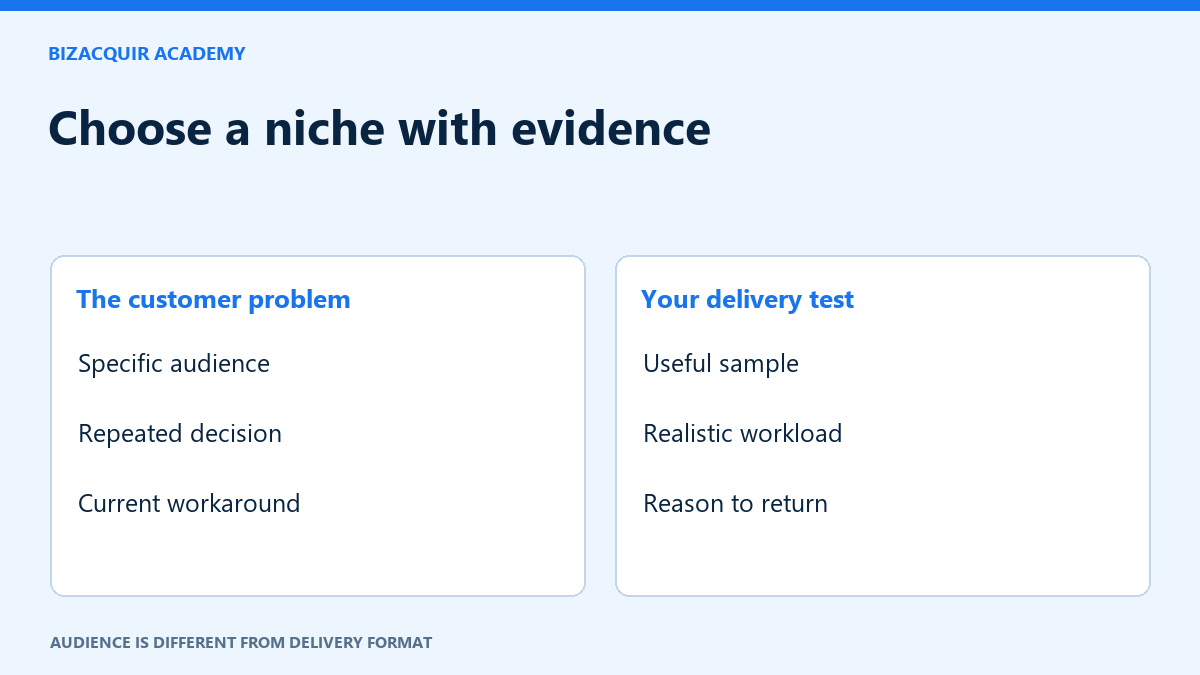
Your first job is to define something people will pay to keep using. A Whop page can package access, but it cannot replace a clear offer, useful delivery or a reason to return. Start with one audience, one recurring problem and one promise you can realistically fulfil.
Write an offer before building the community
Use this sentence: “For [specific person], we provide [specific resource or experience] so they can [practical outcome].” A community for new independent illustrators might offer a weekly portfolio critique and a library of client-brief templates. That is more concrete than “networking and exclusive value.” It also tells you what work you must deliver.
Ask potential members what they already do, what takes too long and what they have paid for. Request examples of the problem, not compliments about your idea. If people want a one-off answer, a recurring membership may be the wrong format.
Build the smallest complete experience
- Choose the deliverable. Specify its format, frequency, limitations and who it is suitable for.
- Create the product. Whop’s official product flow covers a name, headline, pricing and the apps or content included. Preview what a member receives, rather than adding every available app.
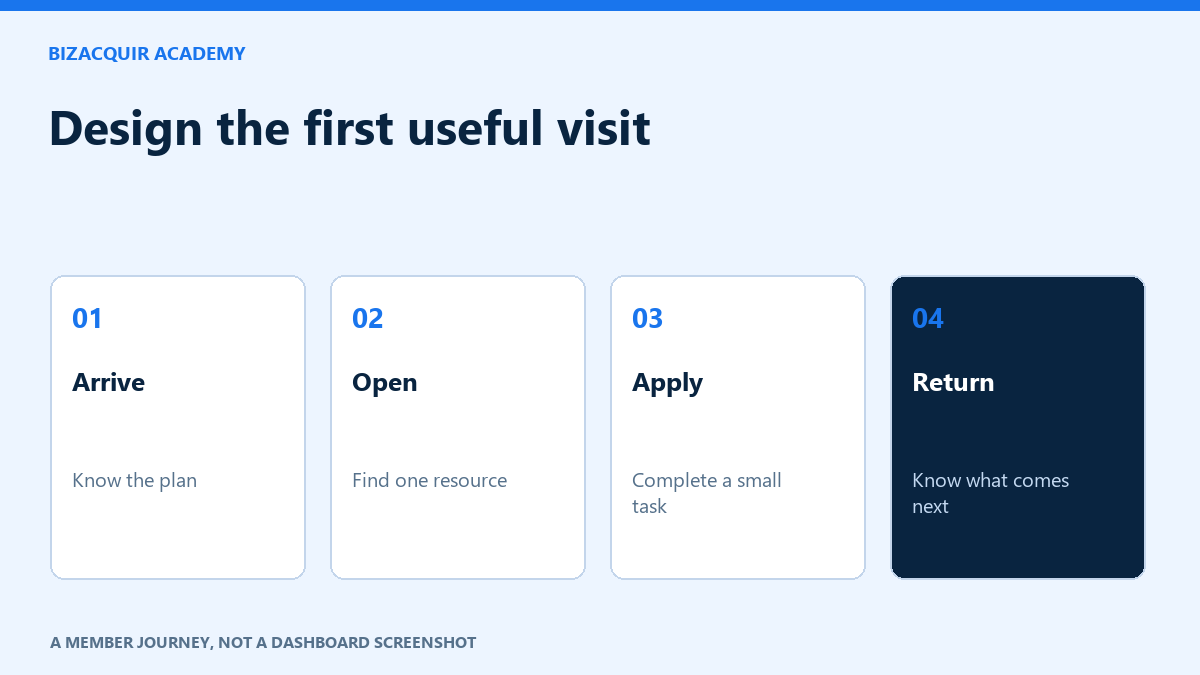
- Create a start-here route. Include an introduction, the first useful task and a clearly identified support channel.
- Set boundaries. Explain conduct rules, billing, cancellation and your refund policy consistently with applicable requirements.
- Check access. Use an appropriate test or free-access route to verify the welcome experience without representing test payments as revenue.
Make pricing and delivery agree
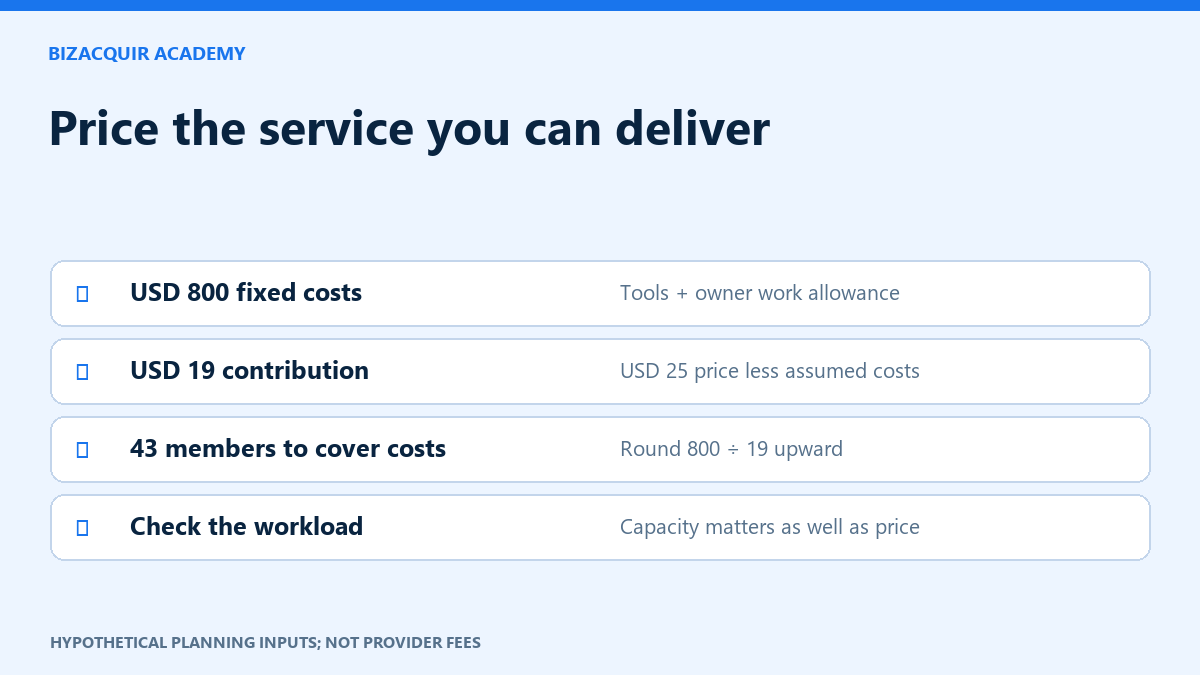
A recurring price creates recurring obligations. Before launch, estimate the time needed for support, content and moderation. If you promise personal feedback to every member, calculate the workload at 10, 30 and 100 members. Restrict the scope or capacity before selling a service you cannot deliver.
For example, a hypothetical group with 20 members paying USD 25 per month would bill USD 500 in a month where everyone pays. That is not USD 500 profit: refunds, fees, software and labour still matter. Do not use this example as an earnings forecast.
Find the first customers through a specific demonstration
Show a sample of the work: a short teardown, a usable template or a clearly explained lesson. Invite people for whom that sample solves a real problem. Describe what the paid offer adds, rather than implying the free example is useless. Ask permission before promotional follow-up and respect the rules of communities where you participate.
Keep a small launch log with the invitation source, questions asked, reason for joining and whether the member completed the first useful task. You do not need a complicated marketing stack to notice that visitors misunderstand the offer or cannot find the welcome material.
Review delivery before expanding
- Can new members explain what they bought?
- Do they reach the first useful outcome without personal rescue?
- Which questions repeat, and can the product answer them earlier?
- Can you deliver the promised cadence without relying on a launch sprint?
Fix those issues before adding tiers or paid acquisition. Keep business records from the beginning: product terms, monthly results, costs and operating instructions. These help you run the business now and explain it credibly if you later decide to sell.
Work through a concrete offer, from promise to product
Consider a hypothetical membership for freelance illustrators who struggle to turn vague client requests into a usable project brief. Its promise is not “get more clients.” It is “prepare a clearer brief before quoting.” The deliverables could be a brief template, one annotated example each week and a group review session. Exclude individual legal advice and unlimited private reviews. This gives the founder a service she can schedule and the member a result they can recognise.
Before opening a checkout, complete this short offer sheet:
| Decision | Example answer |
|---|---|
| Who has the problem? | Independent illustrators handling their first repeat clients. |
| What will they do differently? | Ask the right project questions before agreeing a price. |
| What is ready on day one? | A brief template, a completed example and the next review date. |
| What continues each month? | New worked briefs and a scheduled group review. |
| What is outside the offer? | Client sourcing, guaranteed bookings and unlimited one-to-one support. |
Set up the product and check the member's route
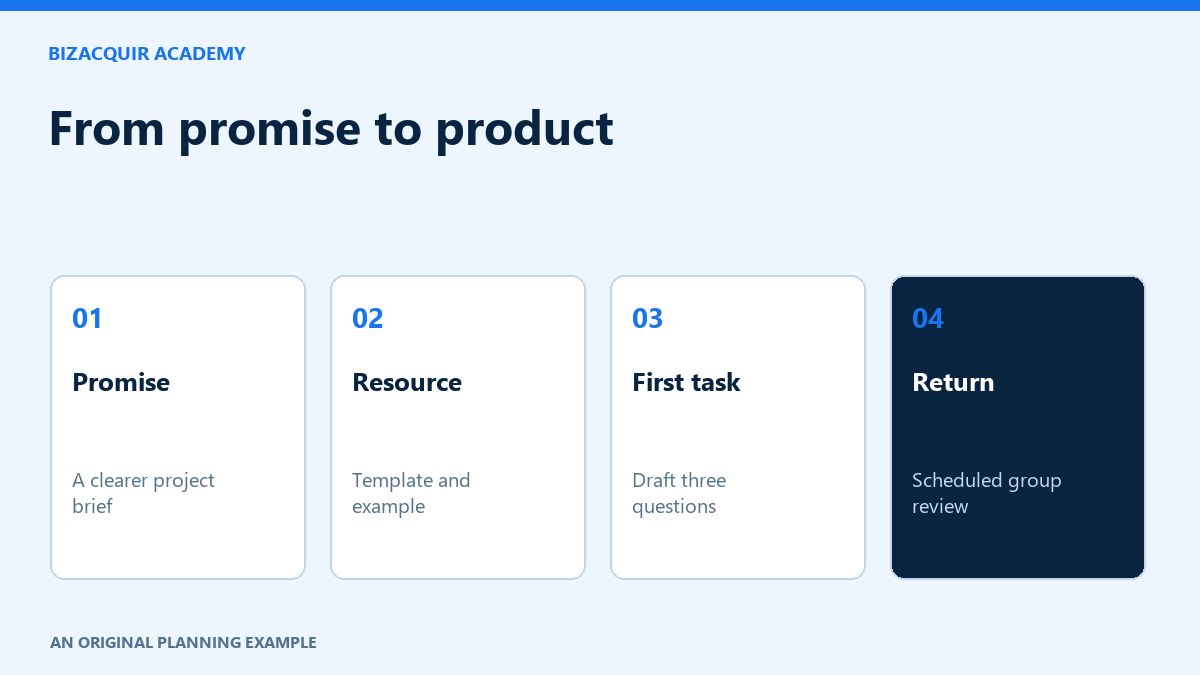
In Whop, open Dashboard → Products → Create product. Enter the product name and headline, choose the price and billing arrangement, then select the apps or experiences included. Finish the description and media before saving. These are the current steps in Whop's product guide; the diagram below is an original planning aid, not a Whop dashboard screenshot.
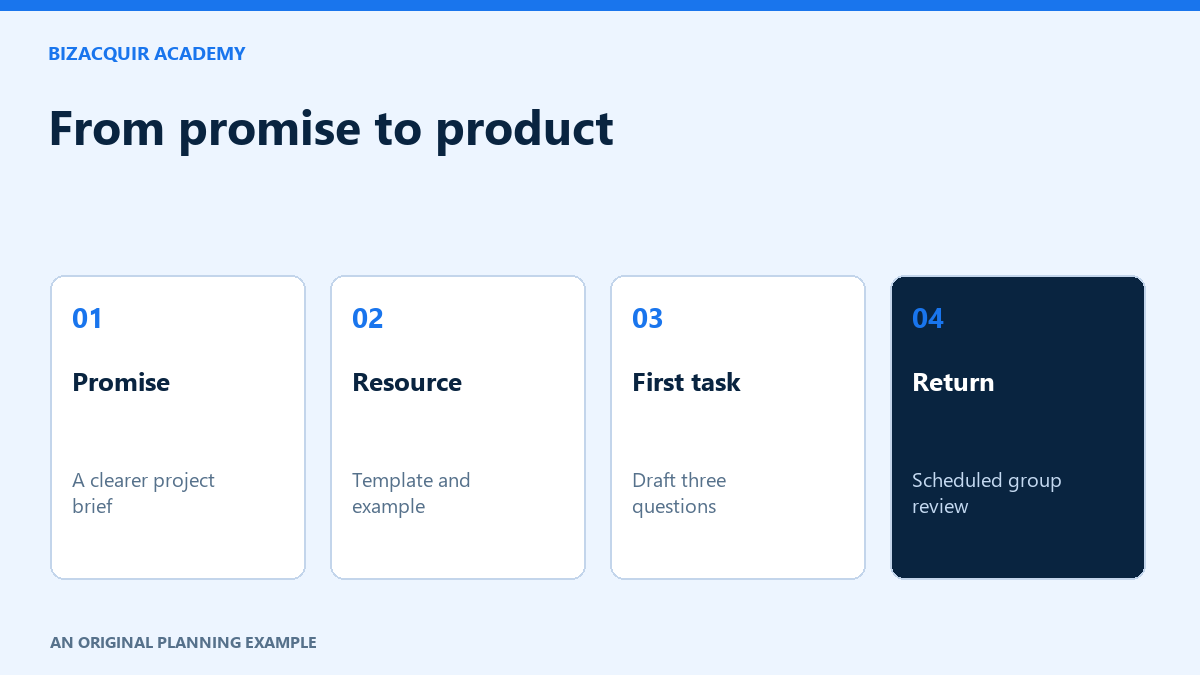
Original instructional diagram: the public promise leads to the included resource, first task and recurring delivery.
- Write the headline as a deliverable. “Weekly brief reviews for freelance illustrators” tells the reader more than “Unlock your potential.”
- Check the billing interval and currency. A number without an interval leaves room for a costly misunderstanding. Review any trial and what happens when it ends.
- Include only the promised experiences. Open each resource through an appropriate member test route. Owner access can conceal a missing entitlement.
- Place the first task before the archive. Give the member a blank brief and one completed example, then ask them to prepare their own draft.
- Explain where questions go. Name the support channel and the kind of help included. Do not imply round-the-clock personal support unless you can provide it.
Run a small launch you can learn from
Invite a manageable group from a relevant, permission-based audience. Use one demonstration that matches the paid offer. For the illustration example, publish a before-and-after brief with fictional client details, explain why the questions matter and link to the membership for continuing practice.
Keep four observations: who viewed the offer, who joined, who completed the first task and what stopped the others. If people join but cannot find the template, fix access. If they understand the offer but do not need repeat help, reconsider recurring billing. If every member needs a private explanation, improve the example before increasing acquisition spending.
A practical launch check
- The public promise matches the resources available now.
- The price, interval, included service and limitations are understandable.
- A fresh member can open the welcome resource on a phone.
- The next scheduled activity has a date and timezone.
- Cancellation, billing help and support are easy to find.
- You can deliver the promised workload at the capacity you are selling.
Keep the first version small, but complete. Adding five empty channels does less for a new member than one useful task that works.
Your next step
Sources and useful references
Platform interfaces and requirements can change. Check the linked official guidance for your account before making changes.
Choose a first-customer test you can learn from
Write one concrete outcome your offer helps a member achieve, the delivery format and the time you can actually support it. Invite a small, appropriate audience to evaluate that offer; do not promise a result you cannot control. Record paid purchases separately from free signups and social reactions. After the first delivery cycle, compare what members used with what you promised before adding another product.
- If people ask the same pre-purchase question, clarify the offer rather than simply lowering the price.
- If purchases happen but delivery takes too long, improve the process before increasing promotion.
- If refunds reveal a mismatch, fix the promise and keep the refund evidence in the financial story.