A price is a promise about the service a member can expect. Start with what you deliver and its cost, then test whether the intended customer values it enough to pay. Copying another community’s price skips both questions.
Choose the billing model first
Whop distinguishes free, one-time and recurring pricing options. A resource that is complete at purchase may suit a one-time payment. A membership with continuing support or updates may suit recurring billing. Make the billing interval, access period and included services visible before purchase.
Offer defined access periods permitted by Whop’s current terms. Explain the service duration and obligations before purchase. Annual billing can improve cash timing, but the cash received is not evidence that the entire service has already been delivered.
Build a simple cost floor
List fixed monthly costs, variable costs per paying member and a realistic allowance for your own work. Treat payment fees, affiliate commissions, refunds and taxes according to the actual arrangement; do not use a generic fee percentage as if it were your Whop contract.
| Hypothetical monthly input | Amount |
|---|---|
| Tools and operating costs | USD 200 |
| Owner work allowance | USD 600 |
| Net contribution per member after assumed variable costs | USD 20 |
| Members needed to cover those assumptions | 40: USD 800 ÷ USD 20 |
This is a planning example, not a suggested price or a market benchmark. If the service cannot support 40 members, change the scope, capacity or economics before advertising it.
Create a price people can understand
Start with one core offer. Add a higher tier only when it has a different, deliverable level of service. For example, a resource library and group questions differ from personal reviews with a fixed monthly limit. Describe the difference in concrete terms, not “premium value.”
Check the real checkout presentation after configuring the product: currency, interval, any trial, initial charge and access inclusions. Whop’s pricing documentation describes these options; which settings are suitable depends on your offer. Confirm how changes affect existing memberships before changing a live plan.
Test a proposition, not just a number
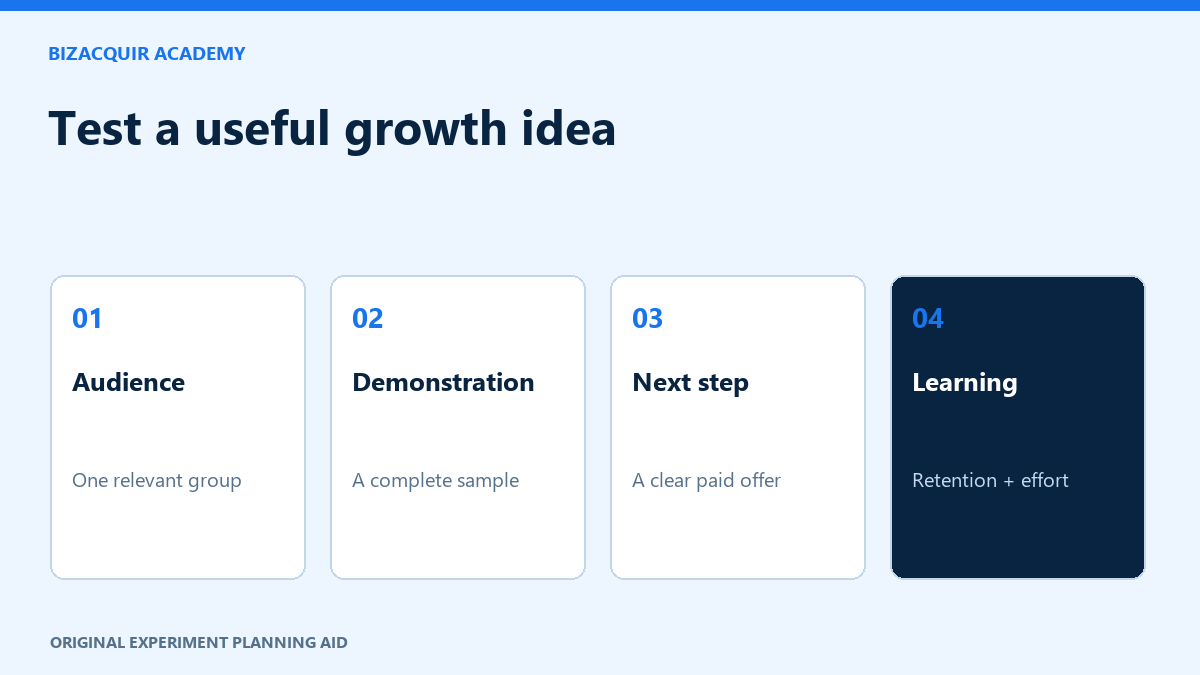
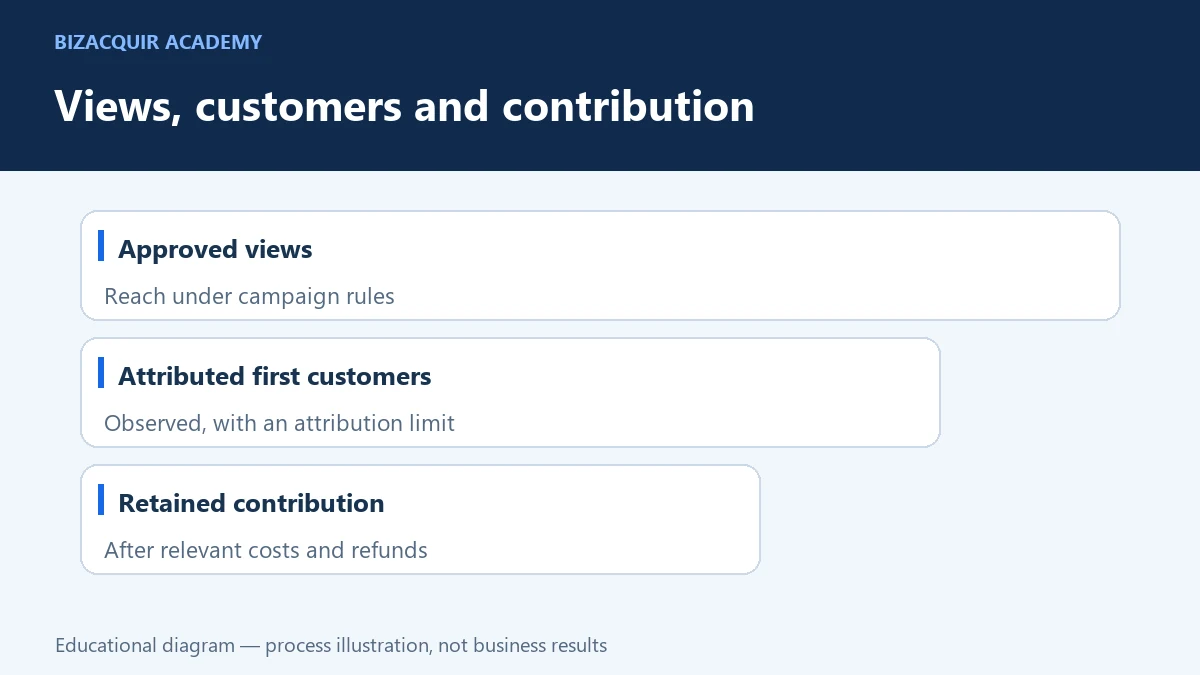
For a new offer, test a clear price with a defined audience and a stable deliverable. Record qualified visits, paid starts, cancellations, refunds and support workload. Changing price, audience and product at the same time makes the result hard to interpret.
Ask non-buyers what prevented purchase. An unclear promise or poor access experience will not necessarily improve after a discount. Ask retained members which part they use; a feature nobody uses may still consume your delivery time.
Review price changes responsibly
- Check current platform behaviour and your existing customer terms.
- Explain the change and its effective date before it affects members where required.
- Keep a record of grandfathered prices, promotions and annual plans.
- Measure retention and contribution after the change, not just new signups.
If you later sell the business, disclose the mix of prices customers actually pay. A list price multiplied by all members can substantially overstate recurring revenue when some members are free, discounted, paused or on annual plans.
Compare two prices with the same workload assumptions
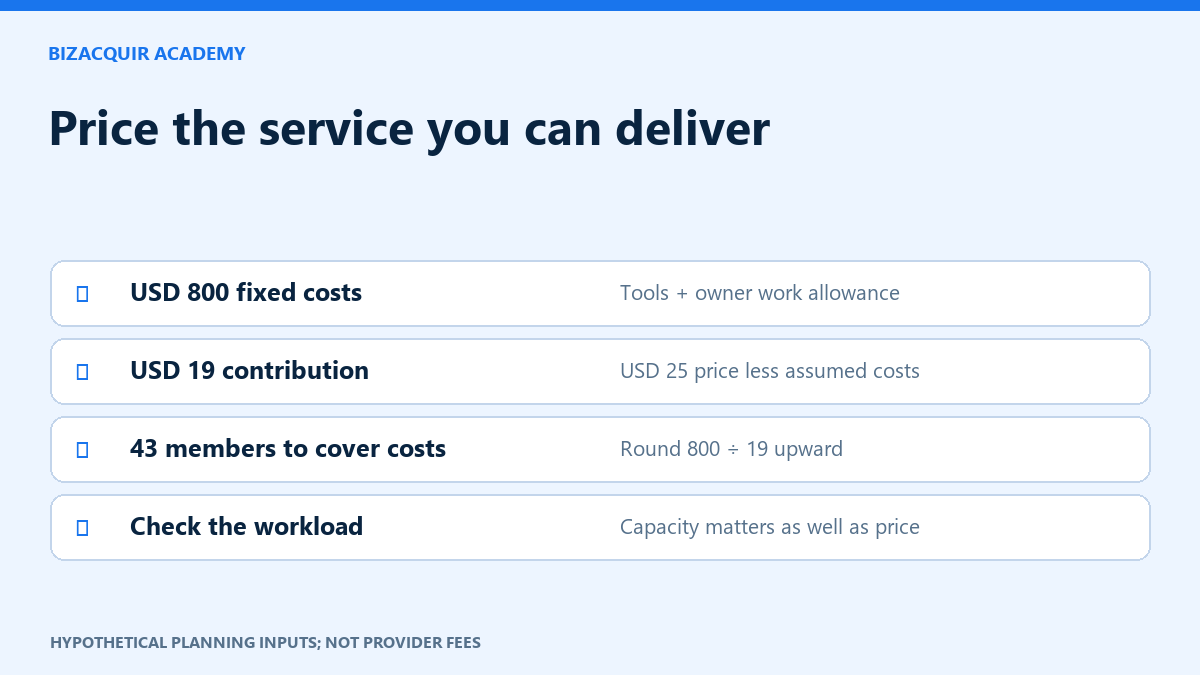
Here is a hypothetical planning exercise, not Whop's fee schedule. Assume USD 800 monthly fixed costs including an allowance for owner work, USD 4 variable delivery cost per paying member and an illustrative payment/refund reserve of 8% of collections. That reserve is a modelling assumption; replace it with your own records and applicable costs.
| Monthly price | Contribution per member | Break-even members |
|---|---|---|
| USD 25 | 25 − 4 − (25 × 8%) = USD 19 | 800 ÷ 19, rounded up = 43 |
| USD 35 | 35 − 4 − (35 × 8%) = USD 28.20 | 800 ÷ 28.20, rounded up = 29 |
This does not prove that USD 35 is the better price. Fewer customers may buy it, and either plan may exceed your service capacity. If each member needs 30 minutes of personal help monthly, 43 members require 21.5 hours of that work before group delivery, moderation and administration.
Annual pricing needs a second calculation
A hypothetical USD 300 annual plan collects USD 300 when paid and represents USD 25 per month when normalised over twelve months. It also creates an obligation to deliver for that period. Do not spend the entire receipt as if there were no future work. Compare the promised annual service cost and possible refunds with the timing of collections.
Keep a price-test decision log
Before a test, record the offer, audience, price, start date and what stays constant. After a comparable observation period, record paid starts, continued paying members, refunds and support hours. A lower signup count can still produce a more sustainable service; a higher signup count can hide heavy support demand.
If the test is inconclusive, say so. Avoid repeatedly changing prices for the same people without a clear explanation. Preserve the actual price and terms for existing members, and check provider behaviour before editing a live pricing option. Use the metrics guide to separate the price printed on your page from the amounts members actually pay.
Your next step
Sources and useful references
Platform interfaces and requirements can change. Check the linked official guidance for your account before making changes.
Test pricing against the work the membership creates
Hypothetical example: a $30 monthly plan with 40 paying members produces $1,200 before refunds, fees and costs. If delivering it takes 25 hours a month, do not assess the offer using only its hosting bill. A higher-support tier should describe the extra service and its limits, not promise unlimited personal access.
Before introducing a new access term, check Whop’s current Seller Terms, which prohibit lifetime, perpetual or indefinite-access products. Existing customer commitments should not be casually rewritten; clarify the supported treatment of the actual plan.