A campaign can generate many views without generating a durable customer base. If Content Rewards contributes to a Whop business, show buyers how activity connects to customers and costs. Keep the useful reach evidence, but do not treat a view count as revenue or an audience the buyer automatically owns.
First identify which kind of reward you mean
Whop’s documentation distinguishes rewards used for community participation from creator marketing campaigns, including clipping and user-generated content. Record the actual program used by the business. The same word “reward” can hide very different commitments.
For a sale, the important details are the campaign dates, eligible work, approved spending, outstanding submissions and rights granted over content. A public campaign page alone may not explain every obligation.
Build a campaign evidence sheet
- Record the campaign objective and observation dates. Separate approved views, submitted content and paid rewards.
- Use identifiable campaign links where appropriate, while retaining an unknown-attribution category.
- Compare attributed first purchases with renewals, refunds and support demand.
- Record approved but unpaid amounts and submissions still awaiting review. Do not count a budget limit as actual spending.
- Identify what creative material the business may continue using and any restrictions on editing, duration or channels.
- Explain what a new owner must do to continue, pause or close the campaign through supported processes.
Use a contribution calculation rather than a views headline
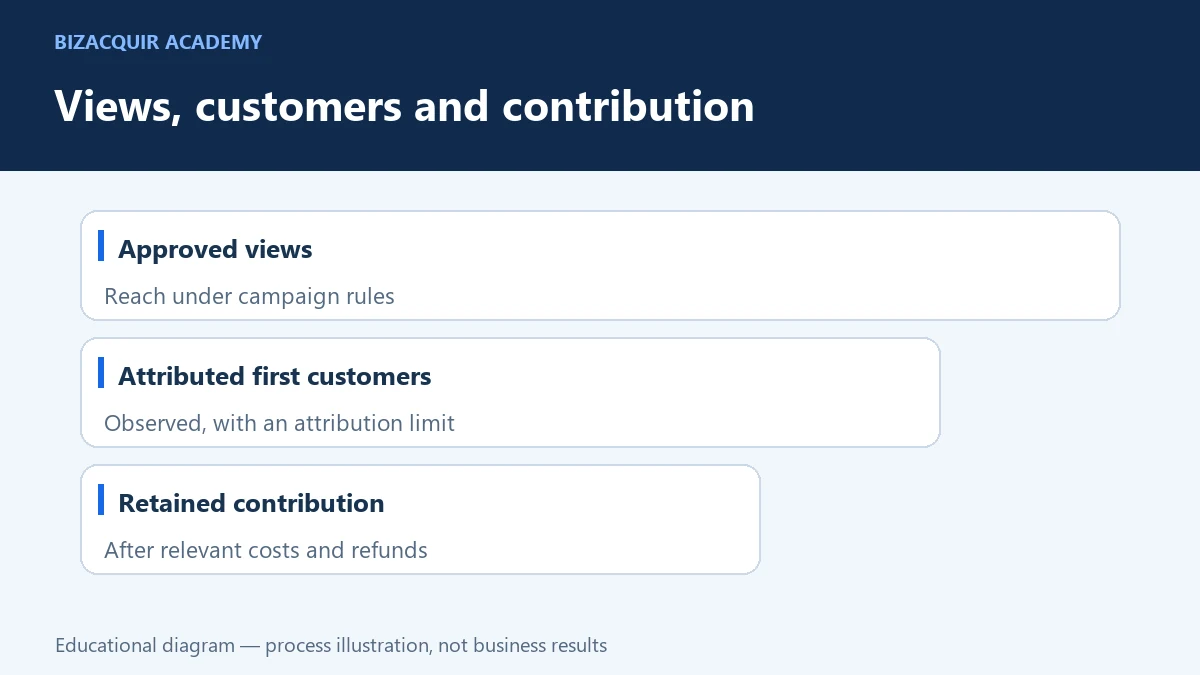
Hypothetical example, one completed USD campaign period: rewards actually incurred are $800, attributed first-purchase collections are $2,400 and refunds linked to those purchases are $240. Collections after those refunds are $2,160. Subtracting the $800 campaign cost leaves $1,360 before payment fees, service delivery and other expenses. That remainder is not profit.
If there were 40 attributed first-time customers, dividing $800 by 40 gives a $20 reward cost per attributed first customer on these assumptions. Do not call it total customer acquisition cost unless it includes all the relevant acquisition expenses. If the 40 are purchases rather than unique customers, do not label them customers.
| Signal | Useful interpretation | Unsupported conclusion |
|---|---|---|
| Approved views | Reach under the campaign’s measurement rules | Guaranteed buyer demand |
| Attributed purchases | Observed purchases under a stated attribution method | All sales were caused by the campaign |
| Renewals after the first period | Evidence of continuing demand for that cohort | Future members will retain at the same rate |
| Creative assets | Material covered by documented rights | The business owns every creator’s account or audience |
Check whether the economics survive a quieter month
Separate a one-off launch burst from a repeatable channel. Compare several completed periods where available and show the current campaign state. If spend stopped and revenue fell, explain both changes rather than presenting the best month as normal.
A buyer may want to know whether the founder approves every submission, supplies the clips or appears in the content. Those tasks belong in the workload and transition plan. They are not solved by transferring a set of links.
Before including the campaign in a sale
- Confirm which content and permissions are actually included. Retain supporting contracts privately.
- List amounts owed and the agreed responsibility for work approved around completion.
- Separate future budget intentions from existing obligations.
- Do not share creator payment details or private contact information in public listing fields.
- Document the regular review work and realistic time needed to continue the channel.
- Confirm provider and creator requirements before promising transferability.
Common mistakes and a better next step
The most common presentation error is combining reach, gross payments and campaign spend into one unexplained growth figure. Use separate rows and matching dates. Another is assuming that a creator’s audience becomes an asset of the business; the relationship and permitted content are what need investigation.
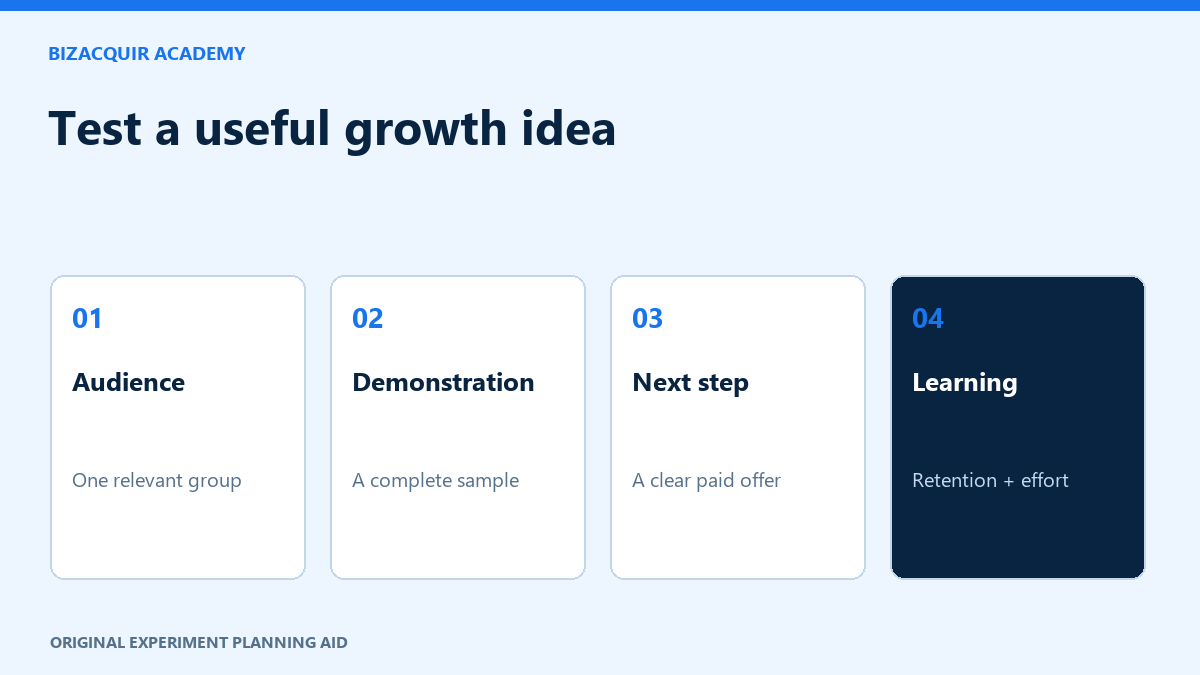
If evidence is limited, run a clearly bounded observation period as part of ordinary business operations, not as a promise of future results. Do not spend money solely to make a sale listing look active. Use the data already available to explain the uncertainty.
Read sustainable Whop growth and affiliate revenue due diligence for related acquisition questions. When the financial story is ready, prepare your Whop business listing.
Sources and further reading
Sources checked on October 23, 2026. Provider features and account eligibility can change; confirm the current options in your own account.