Two offers with the same headline price can have very different economics. One may include substantial transition work, deferred amounts or continuing liabilities. Negotiate the complete package and keep the current proposal unambiguous.
Establish a common set of facts
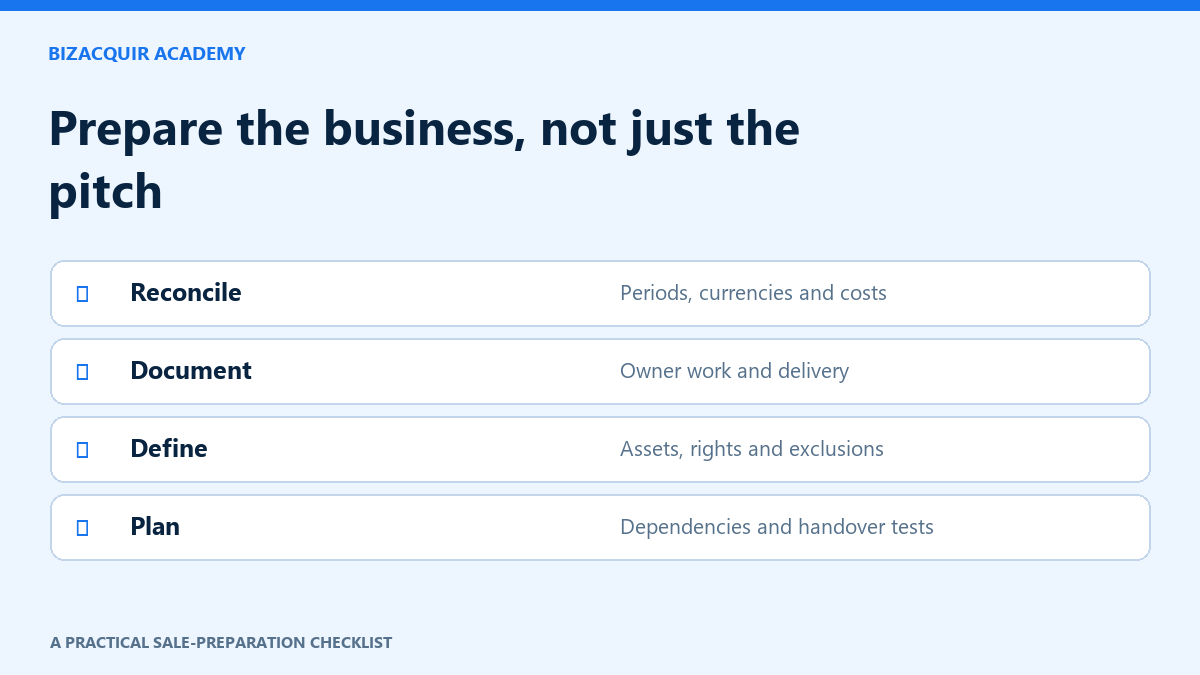
Agree the financial period, currency and measurement basis used in the discussion. Clarify recurring versus one-time revenue, unpaid invoices, refunds and expenses. If the buyer and seller use different profit definitions, resolve that before arguing about a multiple.
List the material uncertainties. Some require more evidence; others require a change to price or terms. Do not use a higher price to gloss over an asset that cannot legally or practically be transferred.
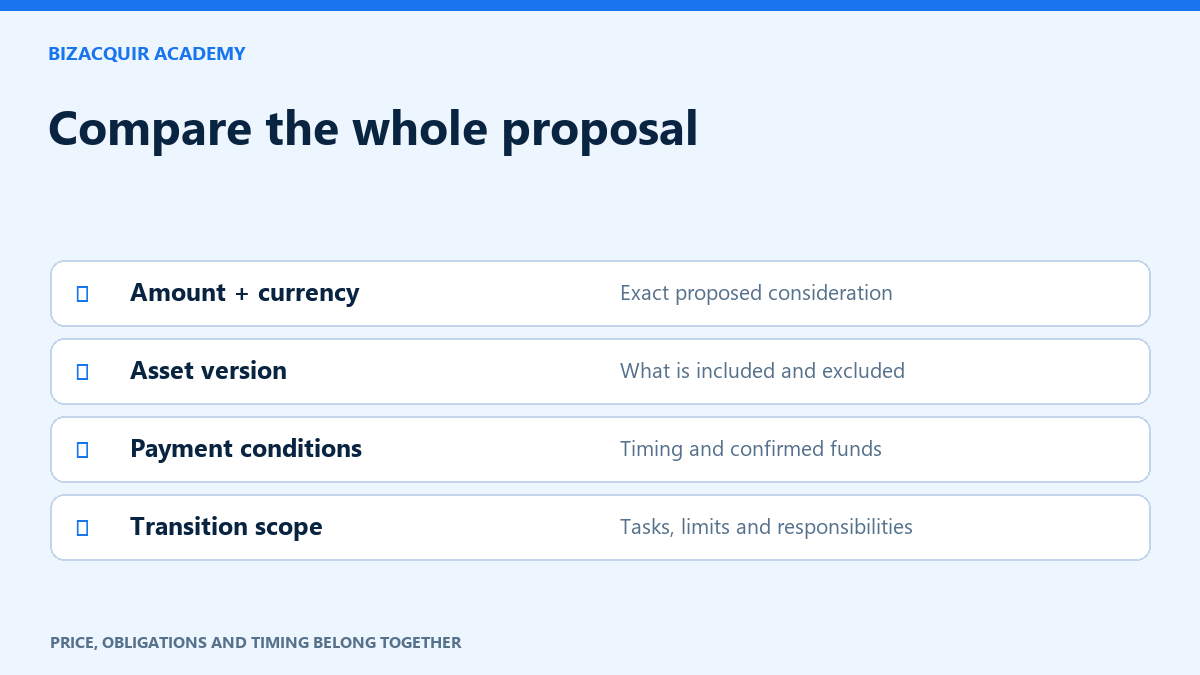
Compare the whole proposal
| Term | What to make explicit |
|---|---|
| Price | Exact amount, currency and what is included. |
| Payment structure | Amounts, conditions and any agreed instalments. |
| Assets and exclusions | The versioned inventory, licences and approvals. |
| Transition work | Tasks, availability and limits actually agreed. |
| Customer obligations | Prepaid delivery, refunds and ongoing support responsibilities. |
| Fees and other costs | Who pays each agreed charge and how it is recorded. |
A request for extra transition work is a change in scope. Give it a clear description rather than relying on “reasonable help” to mean the same thing to both parties.
Use evidence to support a counteroffer
Explain what changed your view. For example: “The replacement support cost reduces the operating profit in our model, so this is the amount we can justify.” Separate facts from assumptions and give the other party a chance to correct an error.
A hypothetical buyer offering USD 40,000 with a defined handover is not automatically offering less value than another offering USD 45,000 with uncertain future conditions. Compare timing, enforceability, workload and risk with appropriate advice. Neither example is a market benchmark.
Keep formal actions distinct from conversation
An enquiry asks for information. A formal offer or assisted Buy Now action is a different step and may require additional confirmations. Read the displayed amount and terms before submitting. Returning from sign-in should not be treated as authorising a transaction.
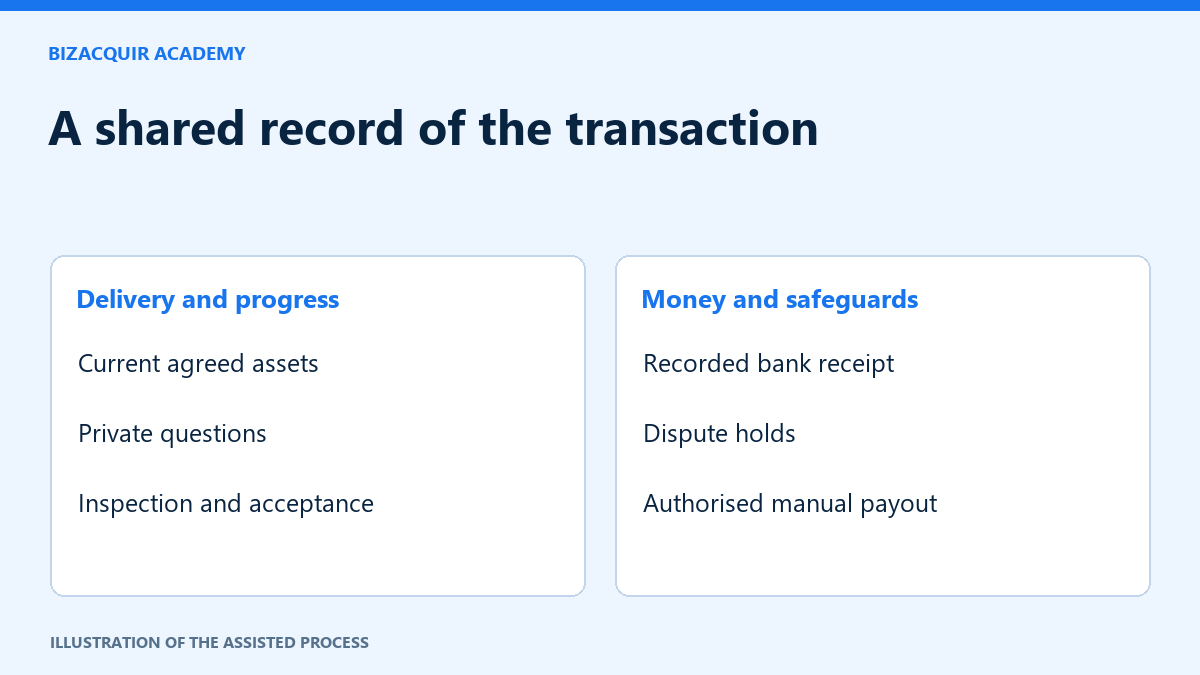
On BizAcquir, Asking Price and Buy Now remain separate. The final agreed amount is recorded in the private deal workflow. Payments are handled through the assisted bank-transfer process, not an instant provider checkout.
Document agreement without losing earlier versions
Record the current terms and obtain the required confirmations. Keep changes traceable. Do not overwrite the history to make a later proposal appear to be the original agreement.
For current USD seller pricing, the published schedule applies 7% to the entire agreed sale price through USD 50,000 inclusive and 5% above it. Existing agreed fees are preserved. Check the actual fee shown for your deal, along with any other confirmed charges; include the agreed 2% buyer fee on top of the sale price. Tax treatment requires its own assessment.
If the parties cannot agree, pause instead of treating silence as consent. A clear decision not to proceed is preferable to a vague agreement that turns into a handover dispute.
Compare gross price with the work and proceeds attached
Consider two hypothetical USD proposals for the same asset scope. A USD 40,000 sale under a 7% seller success-fee agreement leaves USD 37,200 after that seller fee only. A USD 45,000 sale at the same rate leaves USD 41,850, but might also require materially more transition work or deferred collection. The larger number is not enough to compare the proposals.
Write a separate line for each agreed cost, obligation and payment condition. The buyer fee is 2% on top of the sale price; it is not deducted from seller proceeds. Do not assume taxes are zero. BizAcquir's seller schedule uses a whole-sale tier: exactly USD 50,000 is 7%; above USD 50,000 is 5%. Confirm the actual policy agreed for your deal rather than recalculating an older agreement using today's pricing.
Use a counteroffer that can be answered
“Our calculation includes replacing the weekly support work. On that basis we propose [amount and currency] for the asset schedule dated [date], with [specific transition tasks]. The provider transfer question remains a condition to resolve before agreement.”
This gives the other party three things to assess: the financial basis, the scope and the unresolved dependency. “Your price is too high” gives them none. A seller can respond with a correction to the work estimate, a different scope or a different amount.
If instalments are proposed, define their amounts and conditions explicitly. A promise to pay later is not confirmed received funds. Do not treat the instalment size as the basis for changing the seller-fee tier: the agreed rate is based on the total sale price. Final terms, consent and manual payout safeguards still apply. The negotiation should finish with one current proposal that both parties can identify, not competing versions scattered across messages.
Your next step
Ready to prepare your sale? Sell your Whop business or get a free valuation. Create an account or sign in to view your private estimate.
- Cash Upfront or Installments? Compare Whop Acquisition Offers
- How to Value a Whop Business: Factors, Examples and Limits
Sources and useful references
- Whop: provider-specific questions
- BizAcquir: current seller fees
- BizAcquir: agreement and handover workflow
Make two offers comparable before negotiating
Hypothetical example: one offer is $30,000 upfront; another is $34,000 over time with additional support work. The larger headline is not automatically better. Put timing, unpaid amounts, obligations, fees and conditions on the same worksheet. Do not assign a guaranteed value to uncertain future payments.
Use the cash-versus-installments guide and record the accepted version of the terms. A later material change needs fresh agreement, not an informal correction to a previously accepted document.