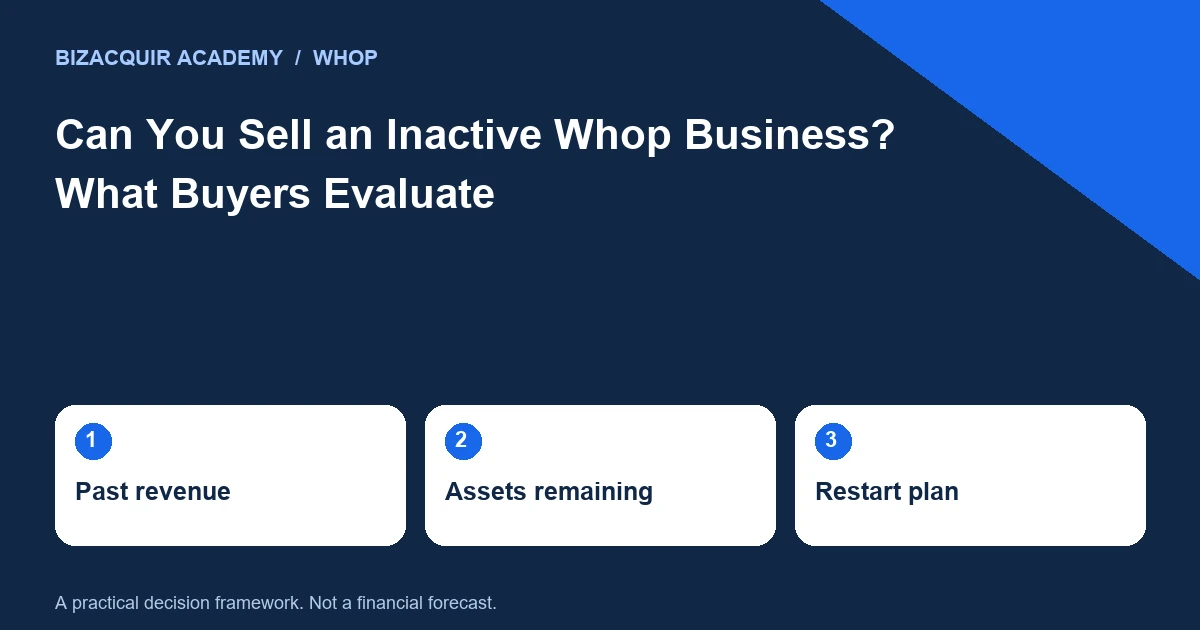
An inactive Whop business can be a sale candidate when it has genuine past revenue and something useful a new owner can operate. The difficult question is not whether it once made money. It is what survives today, what remains owed to members and what a buyer would need to restart it.
Define what “inactive” means
Be specific: stopped acquiring customers, paused new sales, stopped publishing, or shut down the service entirely. These situations are different. A community with no new sales may still have paying annual members. A closed checkout does not necessarily end access or support obligations. Write a short timeline with the last new sale, last delivered update and date operations paused. Then record the current position: paid access, unpaid audience, refunds still open, and staff still involved. Use actual dates rather than “recently.”
Build a before-and-now comparison
| Question | Historical period | Current position |
|---|---|---|
| Revenue | Amount, currency and exact dates | Actual current revenue, including zero |
| Customers | Paying members at that date | Paying, complimentary and inactive accounts separated |
| Product | What was delivered | What still works and what needs repair |
| Work | Tasks the founder performed | Tasks a replacement must take over |
Do not fill a missing current figure with a past average. Explain which records are available and connect the authorized account that contains the relevant trading history. A new synchronization of older transactions can provide useful evidence without making that history current.
Identify the buyer’s restart work
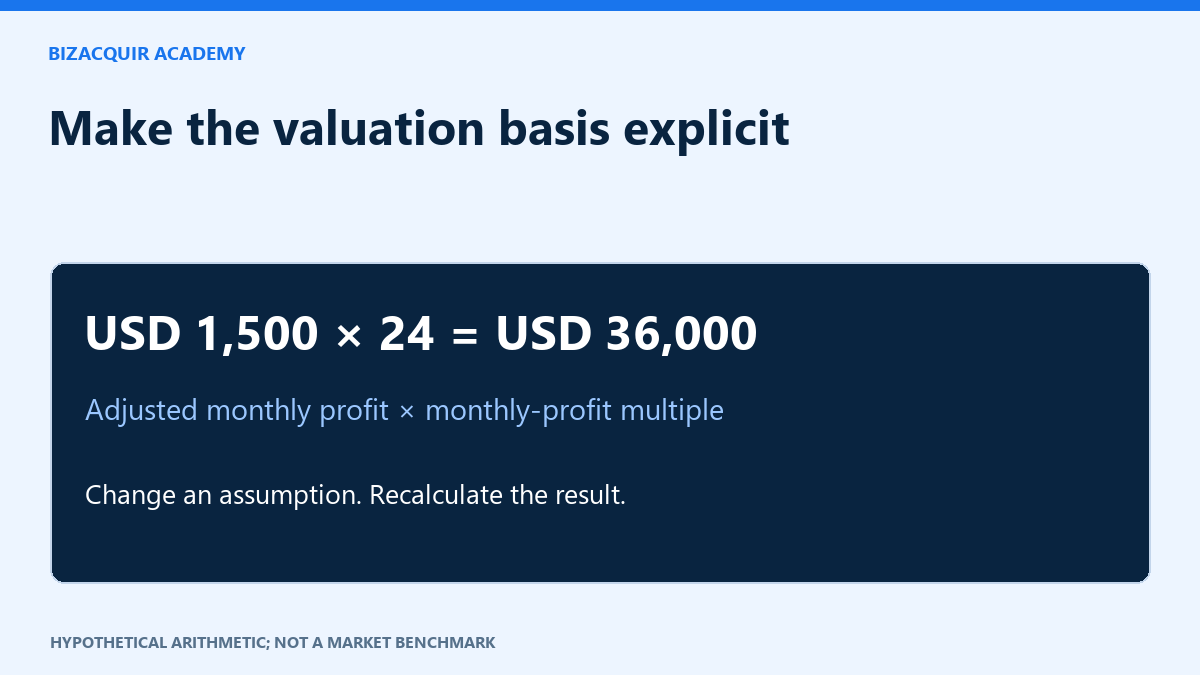
List content updates, broken integrations, moderator recruitment, support backlog and reacquisition work. Mark each item as required before reopening or optional improvement. Include a responsible person, estimated effort and the basis for any cost estimate. Unknown costs remain unknown. Hypothetical example: a community collected USD 18,000 during a twelve-month period ending last year and currently collects zero. Its content library and domain still exist, but two moderators have left. The listing should describe USD 18,000 as historical revenue, not USD 1,500 MRR. The buyer must assess replacement moderation and whether the offer is still relevant; the history does not establish a sale price.
Check the asset boundaries
Document the brand, domain, original content, community and systems included. Separate your personal social profile and personal expertise from business-owned assets. Ask Whop about the appropriate business ownership process for your circumstances; a customer membership transfer is a different operation. Check connected community and software permissions separately. Avoid advertising a payment account or its age as the product. The proposal should be a full business sale with a workable handover.
Prepare your BizAcquir draft
Choose Whop, mark the operation Inactive, add the inactivity date and explain the historical reporting period. Save a draft while you gather answers. First submission requires a genuine successful financial import; a screenshot or manual revenue entry does not replace it. Current zero revenue is not itself a rejection when the relevant past revenue is supported. Before submitting, ask someone unfamiliar with the business to answer three questions from the preview: what is being bought, what does it cost to restart, and what must the buyer still deliver? If any answer is unclear, improve that section rather than adding a more optimistic headline.
A three-line restart worksheet
- Still usable: name the content, community and systems that work today, with the date checked.
- Must be replaced: identify missing moderators, expired tools or outdated lessons, and distinguish a quoted cost from an unknown.
- Still owed: record prepaid access, remaining sessions and unresolved customer obligations.
For a business with current zero revenue, this worksheet helps explain what the buyer would operate. If the business is still trading but sales have fallen, use the revenue-decline guide instead; an operating loss does not automatically make a business inactive.
Check the relevant provider guidance
These official references support the platform-specific steps. Your own contracts, account configuration and agreed sale terms still need to be checked.
Use the seller workspace
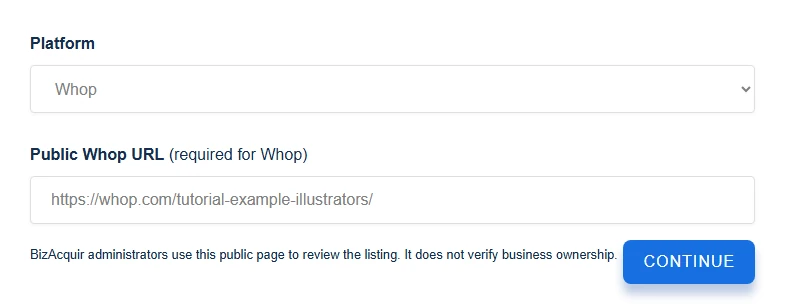
Choose your platform and prepare the public business information. Synthetic tutorial example; this image does not show a real customer. Open the image to inspect the controls.
Describe what stopped and what remains
A useful inactive listing distinguishes the last sales date, the last service-delivery date and any access still owed. A community may stop new sales while continuing to support annual members. Do not label those obligations inactive simply because marketing stopped.
| Check | Useful answer |
|---|---|
| Historical period | The exact earning dates and source. |
| Current state | Known current revenue, access and support commitments. |
| Restart work | Tasks, dependency approvals and realistic unknowns. |
| Included assets | The usable business package, not just old screenshots. |
For the financial timeline, use the report reconciliation guide. Current zero revenue does not remove the genuine connection requirement.
Your next practical step
Use the WHOP selling checklist to turn the gaps into a preparation plan. You can start a private listing draft or explore a free valuation; signup or login is required to view valuation results.
Continue with Selling a Whop Business After Revenue Drops: Explain the Decline and What Makes a Whop Business Transferable Beyond Its Founder?.