Two businesses with the same gross collections can offer very different prospects. Refunds may reduce retained revenue, disputes may create unresolved exposure, and one customer or campaign may account for much of the business. Buyers need the definitions and context behind these figures.
Start with a metric dictionary
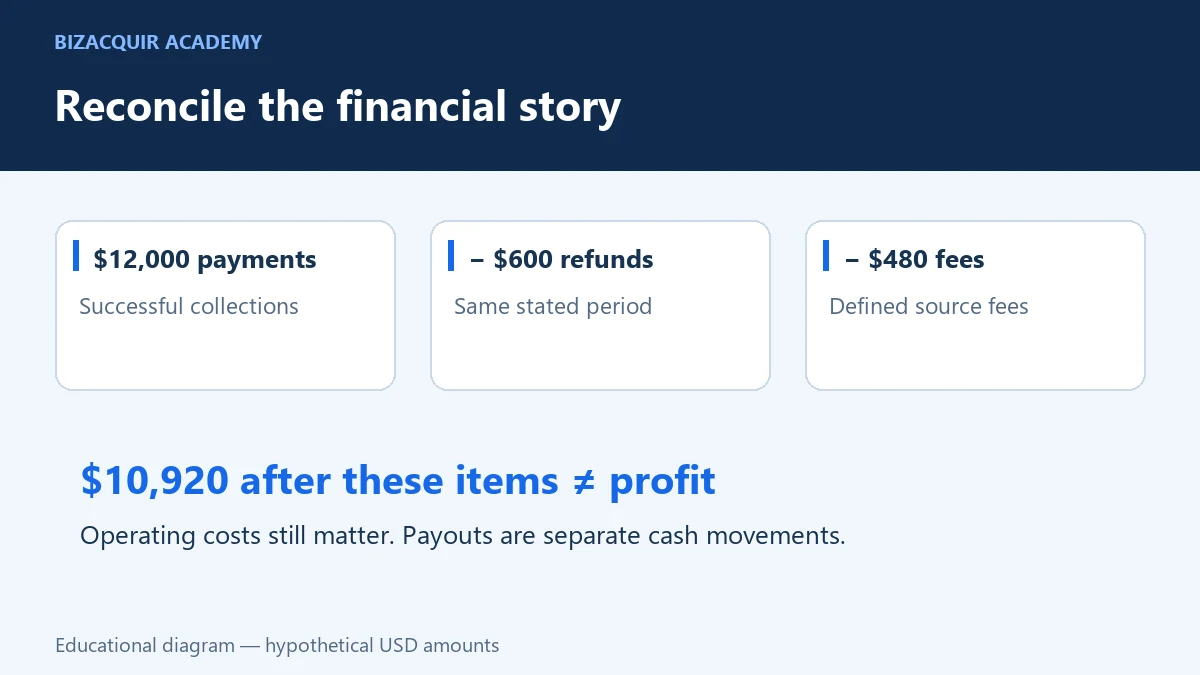
Record the source, dates, currency and definition for every figure. Gross payment volume, refunds, dispute amounts, processor fees and payouts describe different things. A payout is not a profit calculation, and a dispute opened this month may concern a payment collected earlier. For a refund rate, state whether you divide refunded amounts by payment amounts or refunded transactions by transaction count. Use compatible cohorts where possible. Do not compare one provider’s count-based rate with another’s amount-based rate as if they were identical.
Show resolved and unresolved cases separately
Whop provides distinct refund and dispute workflows. Keep completed refunds, open requests, active disputes and final outcomes separate in your sale materials. Do not subtract the same payment twice simply because it appears in more than one report.
| Question | Better evidence | Common mistake |
|---|---|---|
| How much was refunded? | Amounts, dates and original-payment context | Treating unavailable data as zero |
| What remains disputed? | Open amounts and current status | Calling every dispute a final loss |
| Why did it happen? | Anonymized reasons and affected products | Publishing customer complaints with identities |
| What changed? | Completed fixes and later observations | Claiming a fix guarantees no recurrence |
Make concentration visible
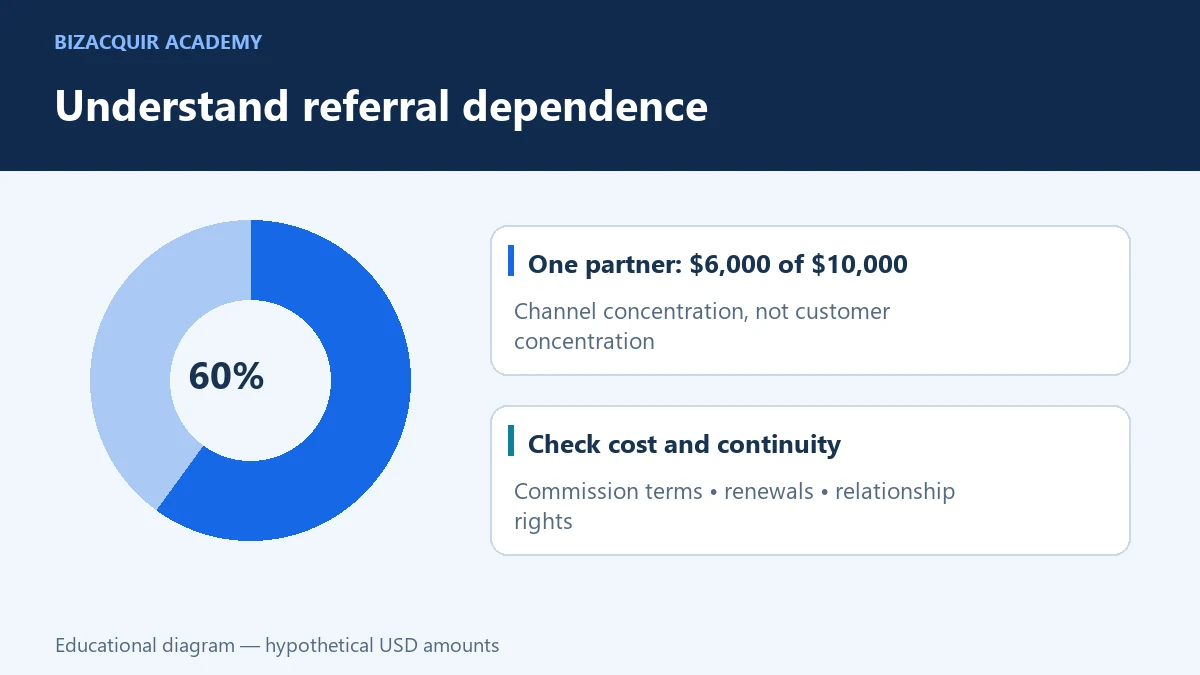
Calculate the share attributable to the largest customer, product, affiliate or acquisition channel for a stated period. These are different concentration measures; label each. A diversified customer base can still depend heavily on one promotional partner. Hypothetical example: USD 12,000 of USD 30,000 annual revenue comes from one partner’s referrals. That is 40% channel concentration, not 40% customer concentration. If the partner has not agreed to continue with a buyer, explain that dependency. Do not present the relationship as a transferable asset merely because it produced revenue before.
Explain risks without hiding strengths
Identify whether refunds were linked to a specific launch, unclear expectations, a service outage or another supported cause. Show what you know and what remains uncertain. Include a reasonable comparison period if available, but do not select only the months that flatter the business. A buyer may ask for a different price, a clearer obligation schedule or more diligence. Those are negotiation topics, not reasons to edit connected figures. Keep sources separate where Stripe and Whop cover overlapping transactions.
Prepare a concise buyer note
Use four headings: metric definitions, observed pattern, unresolved exposure and actions taken. Keep the public summary proportionate; use private permitted evidence for detailed follow-up. Do not send credentials or raw customer records to demonstrate a rate. Before accepting an offer, agree how existing customer obligations and any identified exposure will be handled. The business’s customer refunds are distinct from cancellation of the BizAcquir acquisition itself. Read the applicable transaction terms rather than assuming every type of refund follows the same process.
Check the relevant provider guidance
These official references support the platform-specific steps. Your own contracts, account configuration and agreed sale terms still need to be checked.
Avoid mixing event dates and payment cohorts
A refund issued in October may relate to a September purchase. An October refund-to-October-payment ratio answers a different question from the proportion of September sales later refunded. State which one you use and keep the required underlying amounts or counts.
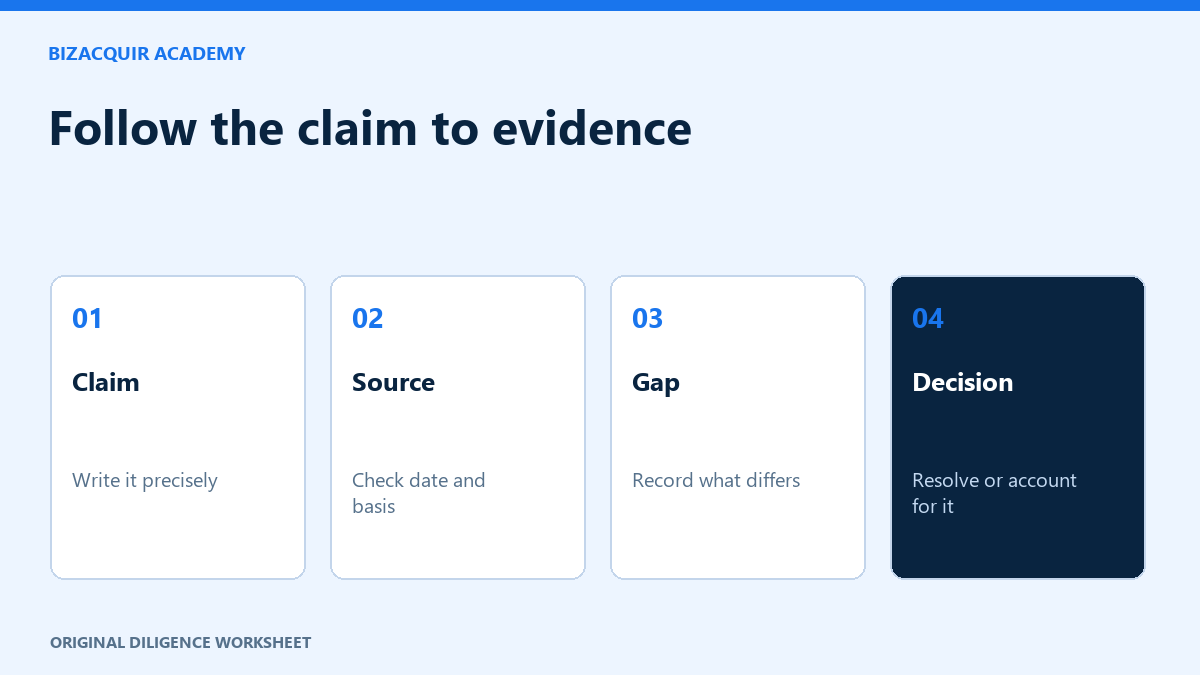
The Whop reconciliation guide provides a matching-period worksheet. Where a promotional partner creates the concentration, use the affiliate review rather than calling it customer concentration.
Your next practical step
Use the WHOP selling checklist to turn the gaps into a preparation plan. You can start a private listing draft or explore a free valuation; signup or login is required to view valuation results.
Continue with MRR, Revenue, Profit and Refunds: Whop Metrics Explained and Build a Buyer Information Pack for Your Whop Business.